Phone accessories with lithium batteries. Perfume. Nail polish. Aerosol dry shampoo. Hand sanitizer. These are some of the best-selling products in ecommerce — and every single one of them is a restricted item in the parcel network. Ship them the wrong way in 2026 and the consequences range from a returned package to carrier account suspension and federal fines that can reach five figures per violation.
Most sellers don’t find out until something goes wrong: a parcel comes back stamped « prohibited, » a carrier audit flags unmarked batteries, or an air shipment gets pulled at a sort facility. The rules aren’t secret — they’re just scattered across carrier terms and hazmat regulations that few store owners ever read.
This guide covers what counts as restricted, the rules for the most common product categories, and how to ship them compliantly without slowing your fulfillment down.
Restricted vs Prohibited: Know the Difference
Carriers sort risky products into two buckets. Prohibited items — explosives, most flammable gases, illegal goods — cannot enter the network at all. Restricted items can be shipped, but only under conditions: quantity limits, specific packaging, hazard markings, ground-only transport, or an approved carrier agreement.
Almost everything an ecommerce store actually sells falls in the restricted bucket, usually under a light-touch regime called Limited Quantity (the successor to ORM-D in the US), which lets consumer commodities travel by ground with simplified rules.
Lithium Batteries: The Big One
Lithium batteries power a huge share of ecommerce catalogs and are the most regulated everyday item. The essentials for 2026:
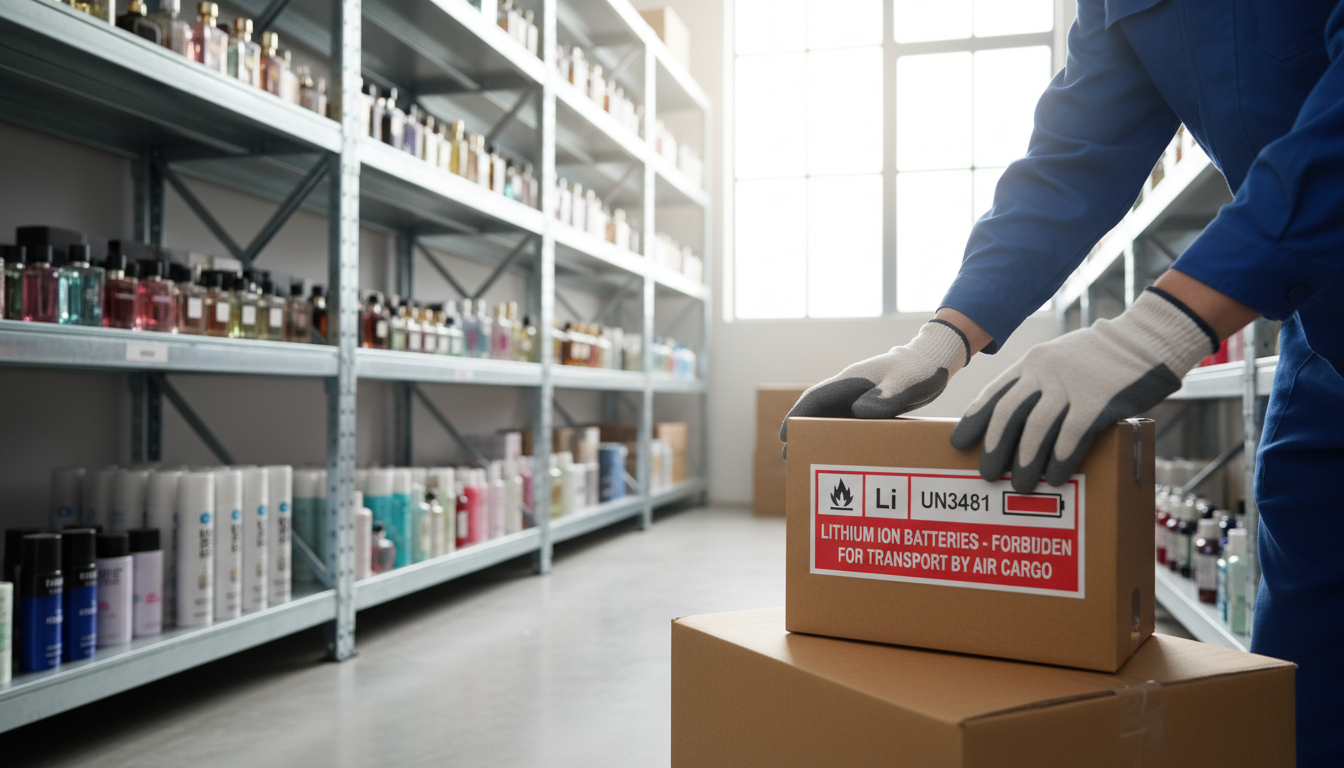
- Batteries installed in or packed with equipment (UN3481/UN3091) are the easiest case: most carriers accept them by ground and air with the lithium battery mark on the box and watt-hour limits respected (typically 100 Wh per battery for standard shipments).
- Standalone batteries (UN3480/UN3090) are far stricter: banned from US domestic air on passenger aircraft, limited to a 30% state of charge for air transport, and often restricted to ground service.
- Damaged, recalled or swollen batteries are effectively unshippable through standard parcel networks.
Practical rule: if your product contains a lithium battery, apply the battery handling mark, keep documentation of watt-hours, and default to ground service unless you’ve verified air eligibility.
Perfume, Nail Polish and Aerosols: Limited Quantity Ground
Alcohol-based fragrance, nail polish and anything in a pressurized can are classed as flammable — Class 3 liquids or Class 2.1 aerosols. For domestic shipping they generally move under Limited Quantity rules:
- Inner containers capped (indicatively 1 L or less for perfume-type liquids, small aerosol cans);
- Strong outer packaging with cushioning and leak protection;
- The black-and-white Limited Quantity diamond printed or labeled on the box;
- Ground service only in most cases — passenger air is off the table without full hazmat processing (the « Y » marked diamond and carrier approval).
USPS additionally requires specific markings and caps quantities per package for flammable liquids; UPS and FedEx require a hazmat agreement for anything beyond Limited Quantity thresholds. International shipment of perfume and aerosols through the postal network is broadly prohibited — use courier services with dangerous goods programs instead.
Other Common Restricted Categories
- Alcohol — prohibited via USPS; UPS and FedEx require licensed-shipper agreements and adult signature.
- CBD and supplements — shippable with documentation requirements that vary by carrier and destination state.
- Lighters, matches, dry ice, magnets, power banks — each carries quantity or marking rules.
- Food and cosmetics internationally — subject to destination-country import rules even when domestically unrestricted.
What Non-Compliance Actually Costs
The downside isn’t theoretical. US hazmat civil penalties can reach roughly $100,000 per violation for cases involving air transport, and carriers routinely suspend shipping accounts for repeated unmarked hazmat. More common — and more corrosive for a store — are the everyday costs: parcels returned or destroyed, refunds and reships you fund yourself, insurance claims denied because the shipment violated carrier terms, and chargebacks from customers whose orders never arrived. Compliance is dramatically cheaper than any of those outcomes.
A Compliance Workflow That Doesn’t Slow You Down
Restricted items become routine once the rules are baked into your fulfillment process:
- Flag restricted SKUs in your catalog so every order routes to the right packaging and service automatically;
- Stock the right supplies: Limited Quantity labels, lithium battery marks, leak-proof liners;
- Default restricted SKUs to ground service and set realistic delivery expectations on product pages;
- Train whoever packs orders — one afternoon covering markings and inner-packaging rules prevents most violations;
- Re-check rules annually: carrier hazmat terms and battery regulations are updated nearly every year, and 2026 tightened several air provisions.
Ship Restricted Products with Confidence
Restricted doesn’t mean off-limits — it means ship it right. Sellers who master Limited Quantity rules can carry high-margin categories like fragrance, cosmetics and electronics that less careful competitors avoid, and do it without account-threatening surprises.
Not sure how your catalog should ship? HereWeShip helps ecommerce sellers pick compliant services and packaging for every SKU — batteries, liquids, aerosols and all — while keeping rates low across carriers. Get started today and ship your full catalog with confidence.
Thresholds and figures above are indicative for 2026 and vary by carrier, service and agreement — always confirm current carrier terms before shipping.