
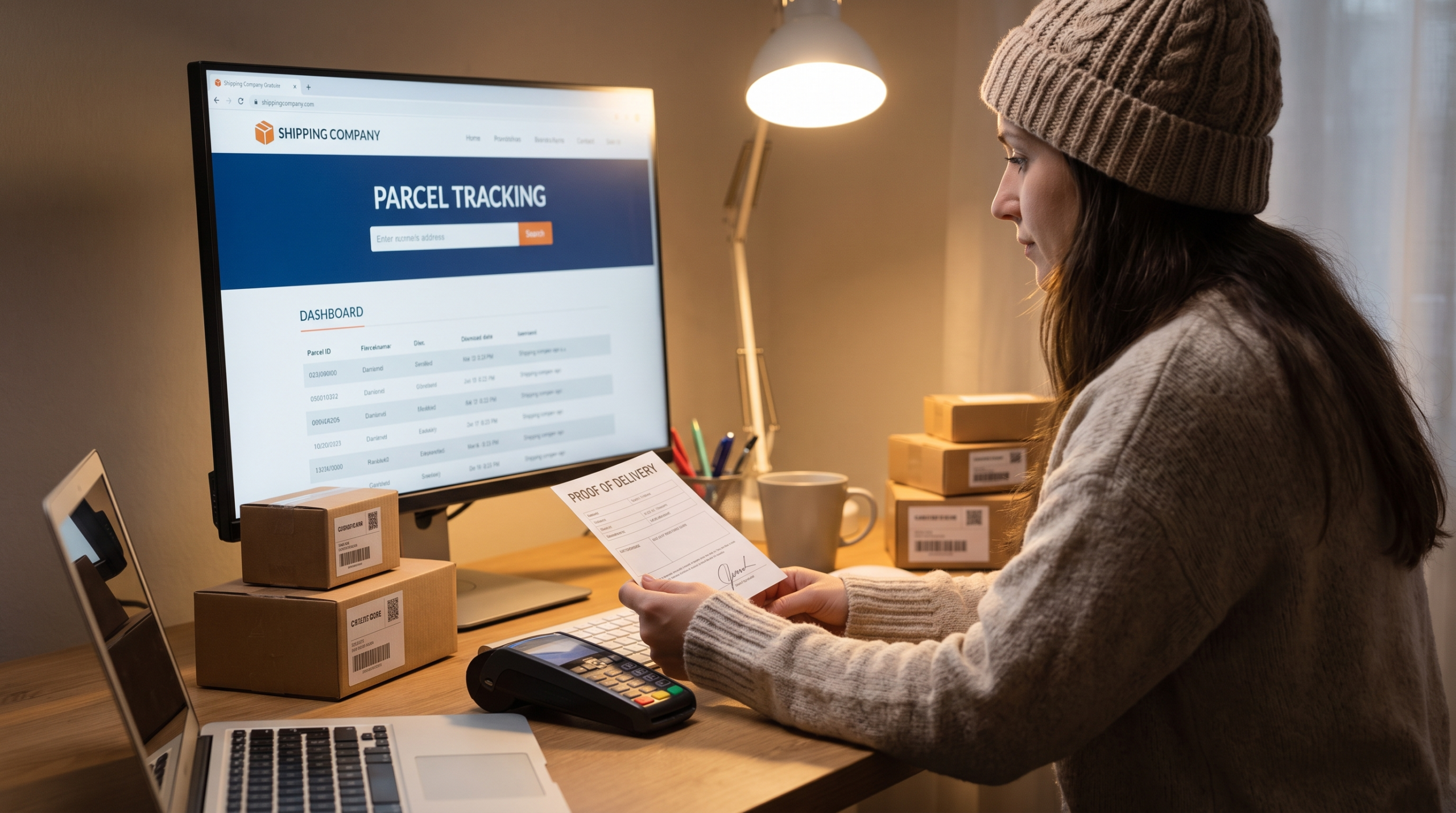
A customer says the package never arrived. Your tracking says delivered. Their bank sides with them, pulls the money out of your account, and adds a fee on top. You are out of the product, the shipping cost, the sale and the penalty.
This is the item not received, chargeback — Visa reason code 13.1, Mastercard reason code 4855 — and it has quietly become one of the most expensive line items in ecommerce. Mastercard's 2026 research puts the fully loaded cost of a single chargeback at roughly $128 once product loss, shipping, fees and staff time are counted. We have $40 order, that is a catastrophic ratio.
The uncomfortable part: most of these disputes are winnable, and a large share are preventable outright. Both outcomes depend almost entirely on decisions you make in your shipping operation, before anyone disputes anything.
The Numbers Sellers Need to Know in 2026
Three figures should shape how you think about this:
- The ecommerce retail chargeback rate averages roughly 0.47% to 0.95% of transactions. Dropshipping runs higher, driven by long transit times and description mismatches.
- Merchants win only 20-30% of chargebacks when they respond without solid evidence. With the right evidence and a disciplined process, win rates climb to 65-90%.
- Cross a dispute-to-transaction ratio of 0.9% and you can face monthly monitoring fines starting around $5,000.
There is also a deadline worth marking. The combined fraud-and-dispute threshold that triggers additional fees is dropping from 2.2% to 1.5% as of April 2026. Sellers who have been sitting comfortably under the old ceiling may find themselves in a penalty band without changing anything about how they operate.
Not All of These Claims Are Honest
Visa's 2025 Global eCommerce Fraud Report found that false non-receipt claims reached 50% of surveyed merchants within a single twelve-month window. See you later 29% reported outright manipulation of shipment or carrier tracking data.
That does not mean you should treat customers as adversaries — most non-receipt complaints are genuine, and porch theft is a real and growing problem. But it does mean your evidence needs to be strong enough to distinguish the two, because the issuing bank will not do that work for you.
The Evidence That Actually Wins
Not all evidence carries equal weight in representation. Ranked roughly by effectiveness:
| Evidence type | Strength |
|---|---|
| Order-linked packing video, timestamped at packing | Highest — independently verifiable |
| Delivery confirmation with proof of receipt | Very strong |
| Prior undisputed transaction history (Visa CE3.0) | Strong for repeat customers |
| Communication records showing commitment | Moderate but often decisive |
| Product documentation and descriptions | Supporting |
Note what tops that list. A packing video tied to a specific order number, timestamped at the moment of packing, is the single most powerful artifact you can produce — because it is difficult to fabricate after the fact and it addresses the «empty box» and «wrong item» variants of the claim as well.
Visa's Compelling Evidence 3.0 framework deserves particular attention. If a disputing customer has a history of prior undisputed transactions with you at the same address or device, CE3.0 lets you submit that pattern as evidence. It is one of the few mechanisms that can shift liability back before the dispute even reaches full representation — and it is badly underused by mid-size sellers.
Shipping Decisions That Prevent the Dispute Entirely
Winning a chargeback still costs you time and a fee. Preventing one costs nothing. These operational choices do most of the work:
Match Delivery Method to Order Value
Blanket policies waste money. Tier by risk instead:
- Low value: standard delivery with tracking is sufficient
- Mid value: add delivery photo confirmation where the carrier supports it
- High value: require signature — the fee is trivial against a $128 chargeback plus lost goods
- Very high value or high-theft postal codes: route to a parcel locker or pickup point
Signature fees at major carriers run in the range of $7-$10 per parcel. We have $400 order, that is cheap insurance. We have $25 order, it is not worth it. The mistake is applying one rule to both.
Offer Out-of-Home Delivery at Checkout
Parcel lockers and pickup points essentially eliminate the doorstep-theft variant of non-receipt, because the parcel is never left unattended. Where locker networks are dense, offering this option at checkout removes an entire dispute category for the orders that use it.
Validate Addresses Before the Label Prints
A meaningful share of «never arrived» claims are simply parcels delivered to a slightly wrong address. Address validation at checkout catches these before they both become a delivery failure and a dispute.
Keep Customers Informed After Purchase
Proactive tracking notifications do two things. They reduce the anxiety that drives a customer to their bank instead of your inbox, and they create a documented communication trail that strengthens your case if a dispute lands anyway.
Build a Response Process, Not a Scramble
Most losses happen because sellers respond late, incompletely, or not at all. A workable process looks like this:
- Make the customer service path easier than the bank path. Visible, fast support turns would-be chargebacks into ordinary refund conversations — which cost you far less.
- Log every dispute with its reason code. Patterns emerge quickly. Concentrated non-receipt claims from one region, one carrier or one product usually point at a fixable operational cause.
- Assemble evidence from a template. Do not improvise under deadline. A standing checklist — tracking, delivery confirmation, packing record, customer correspondence, order history — makes responses consistent and fast.
- Respond to everything worth responding to. Non-response is an automatic loss. Weigh the fee against the order value, but do not let winnable disputes lapse by default.
- Watch your ratio monthly. With the threshold tightening to 1.5% in April 2026, this is a metric to monitor deliberately rather than discover through a penalty notice.
What This Costs If You Ignore It
Consider a store doing 2,000 orders a month at an average order value of $60 — $120,000 in monthly revenue. At a 0.7% chargeback rate, that is 14 disputes a month. At roughly $128 each, that is about $1,792 monthly, or over $21,000 a year, before any monitoring fees.
Moving the win rate from 25% to 75% through better evidence recovers a substantial portion of that. Preventing a third of the disputes outright through smarter delivery routing and address validation compounds it further. Neither change requires new headcount — only a decision to treat delivery evidence as a business asset rather than an afterthought.
All figures cited here are indicative industry benchmarks and vary considerably by category, geography, payment processor and card network rules. Confirm current thresholds and fees with your own payment provider.
Where to Start
Pick the highest-leverage change first. For most sellers that is tiering delivery method by order value and turning on delivery confirmation — a same-week change that immediately strengthens every future dispute response.
If your non-receipt claims are concentrated around specific lanes, carriers or destinations, the underlying problem is usually a shipping problem rather than a payments problem. HereWeShip helps online sellers build delivery setups with the tracking, confirmation and routing options that keep parcels — and the evidence trail behind them — intact. Start with a look at where your disputes are actually clustering.