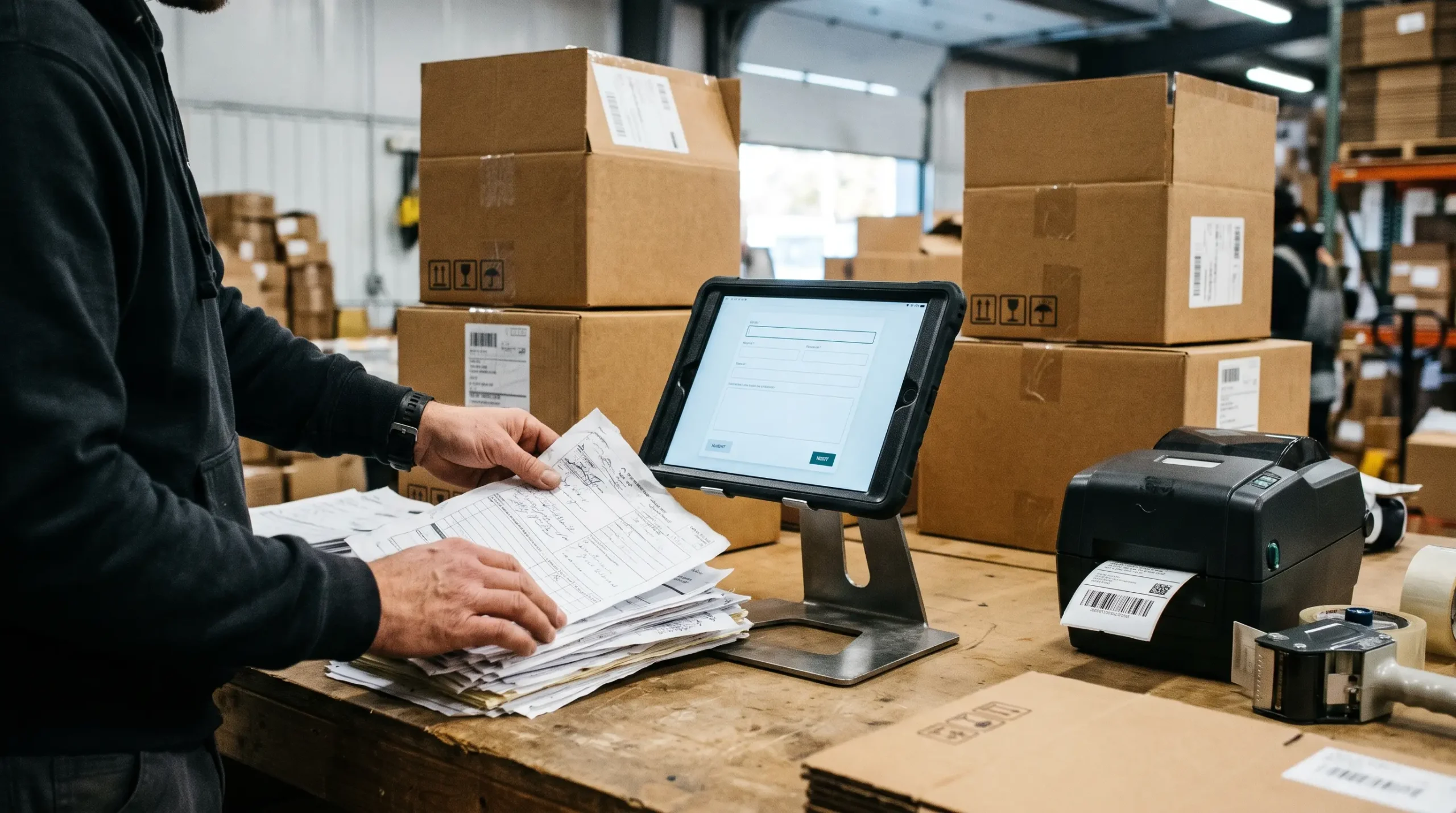

On January 4, 2027, FedEx moves 2,533 ZIP codes out of Extended delivery area and into Remote — a reclassification that adds $12.20 per commercial package and $8.95 per residential package at list, before any rate increase. That is a 220% jump on the commercial surcharge for a destination you are already shipping to today, with no change on your side. UPS changes its own area surcharge ZIP list on December 21, 2026 and raises every delivery area tier by roughly 9%. The surcharge amounts are the small part of this story. The ZIP list is the big one.
What is changing with the delivery area surcharge in 2027?
Three separate things move, on three separate dates, and only one of them is the published surcharge amount.
First, the amounts rise. FedEx raises each delivery area tier on January 4, 2027; UPS raises each tier on December 21, 2026, by about 9% across the board. Second, both carriers republish the ZIP code lists that decide which tier a destination falls into. Third, both carriers also change zone assignments for certain origin and destination ZIP pairs — UPS on December 21, 2026 and FedEx on February 1, 2027 — which is a different mechanism that moves the base rate rather than the surcharge.
A seller who budgets only for the published percentage increase will miss most of the cost. The reclassification is where the money is.
How much is the delivery area surcharge in 2027?
These are the per-package list amounts, as published in FedEx’s 2027 changes to surcharges and fees and UPS’s revised rates for value-added services effective December 21, 2026.
| Surcharge tier | FedEx 2026 | FedEx from Jan 4, 2027 | UPS 2026 | UPS from Dec 21, 2026 |
|---|---|---|---|---|
| Delivery area, commercial | $4.45 | $4.70 | $4.50 | $4.90 |
| Delivery area, residential | $6.60 | $7.00 | $6.55 | $7.15 |
| Extended delivery area, commercial | $5.55 | $6.00 | — | — |
| Extended delivery area, residential | $8.80 | $9.60 | $8.85 | $9.65 |
| Remote area, commercial | $16.75 | $17.75 | $16.50 | $18.00 |
| Remote area, residential | $16.75 | $17.75 | $16.50 | $18.00 |
| Residential delivery surcharge, Ground | $6.45 | $6.90 | $6.50 | $7.10 |
Read across the Remote row. The gap between the standard delivery area tier and the Remote tier is $13.05 commercial on FedEx in 2027. That single step is larger than the entire base rate on many lightweight parcels, which is why a tier reclassification hurts far more than a 9% surcharge increase.
How many ZIP codes actually change tier?
FedEx’s new list, effective January 4, 2027, compared against the list effective July 20, 2026:
| FedEx delivery area tier | ZIP codes, current list | ZIP codes, Jan 4, 2027 | Exchange |
|---|---|---|---|
| Delivery area (standard) | 7,682 | 7,487 | −195 |
| Extended delivery area | 14,378 | 12,085 | −2,293 |
| Remote area | 3,591 | 6,124 | +2,533 |
The movements behind those totals: 2,533 ZIP codes go from Extended to Remote, 240 go from the standard tier to Extended, and 45 become surcharged for the first time. Critically, no ZIP code moves down a tier. There is no offsetting relief anywhere in the list. The Remote tier grows by 71%.
UPS is less transparent at the time of writing. UPS has confirmed that its area surcharge ZIP code list changes on December 21, 2026, but as of mid-November the new list had not been published. For reference, the current UPS list, effective June 1, 2025, carries 7,641 standard, 14,368 extended and 3,518 remote ZIP codes — strikingly close to FedEx’s pre-2027 distribution. If UPS follows the same direction of travel, expect a comparable expansion of its remote tier and check the list the day it appears.
What does one reclassified ZIP code cost you?
Take a destination that sits in FedEx Extended delivery area today and lands in Remote on January 4, 2027, at list rates:
- Commercial: $5.55 becomes $17.75. That is $12.20 more per package, a 220% increase on that line.
- Residential: $8.80 becomes $17.75. That is $8.95 more per package, a 102% increase.
Now multiply by volume. A seller shipping 40 packages a week into reclassified commercial addresses absorbs roughly $25,000 a year in new surcharge, from a change they were never notified about individually. At HereWeShip we see this pattern every January: the invoice goes up, nobody can point to a rate increase that explains it, and the cause turns out to be twenty destination ZIP codes that quietly changed tier.
When do the zone changes hit, and how are they different?
Zone changes are a separate mechanism and they move your base rate, not your surcharge. UPS changes ZIP-to-zone assignments for certain rate zones on December 21, 2026. FedEx changes zones for select origin and destination ZIP code pairs on February 1, 2027 — a month after its delivery area list changes, which means a second, smaller invoice shift in February that is easy to misattribute to the January increase.
Neither carrier has published a count of affected ZIP pairs. The practical consequence is that you need to re-rate your lanes twice: once against the January list and once in February.
Two other 2027 dates belong in the same operational calendar. On December 21, 2026, UPS raises the minimum billable weight for Additional Handling from 40 lb to 50 lb, which pulls a band of mid-weight parcels into that surcharge. On January 18, 2027, FedEx introduces a $25 paper document fee and a $5 manual air waybill fee per shipment, and extends the residential delivery charge to qualifying international shipments.
How do sellers limit the damage?
This is one of the few parcel cost problems you can solve with data you already own.
- Pull your destination ZIP mix and match it against the new lists. Export the destination ZIP code of every package you shipped in the last 90 days, deduplicate, and check each one against the January 4, 2027 FedEx tier list and the UPS list when it publishes. You will typically find that a small number of ZIP codes carry a large share of your reclassification exposure.
- Rate-shop per ZIP code, not per carrier. FedEx and UPS tier the same ZIP code differently, and the two lists change on different dates. A destination that becomes Remote on FedEx in January may still be Extended on UPS. For affected destinations, the cheaper carrier changes.
- Look hard at regional carriers for the newly Remote tier. A $17.75 surcharge is the threshold at which a regional carrier or a postal hand-off usually wins outright on rural residential delivery, even with slower transit.
- Use access points and lockers where the address is the problem. Diverting a rural residential delivery to a staffed access point can take the package out of the residential and extended tiers at once.
- Move inventory closer. Distributed inventory cuts zones and surcharge tiers together. If a cluster of reclassified ZIP codes sits around one metro, a second stocking location can remove the surcharge instead of paying it.
- Validate addresses at checkout. Commercial addresses misclassified as residential pay both the residential surcharge and the residential delivery area tier. In 2027 that is a $7.00 plus $7.00 mistake per package on FedEx.
- Re-set your shipping rates and free-shipping threshold before the dates. A flat domestic rate built on a 2026 surcharge table loses money on every reclassified destination from January 4.
Check the list, not the press release
The published rate increase for 2027 is 5.9% at both FedEx and UPS. For a seller with rural or commercial-rural volume, the real increase is nothing like 5.9%, and the difference is entirely in a ZIP code list that neither carrier will send you.
All figures here are list amounts and tier counts as published as of November 25, 2026, drawn from each carrier’s own 2027 rate and surcharge documents. They are indicative: what you pay depends on your carrier agreement, the service level, the destination state and whether your negotiated rates cap or waive any tier. Verify against your own agreement and your own invoices.
If you would rather not reconcile 20,000 ZIP codes by hand, HereWeShip maps your actual destination mix against the 2027 tier lists, shows you which of your lanes are about to get more expensive and by how much, and rebuilds the carrier and routing mix around them — before the January invoice, not after it.