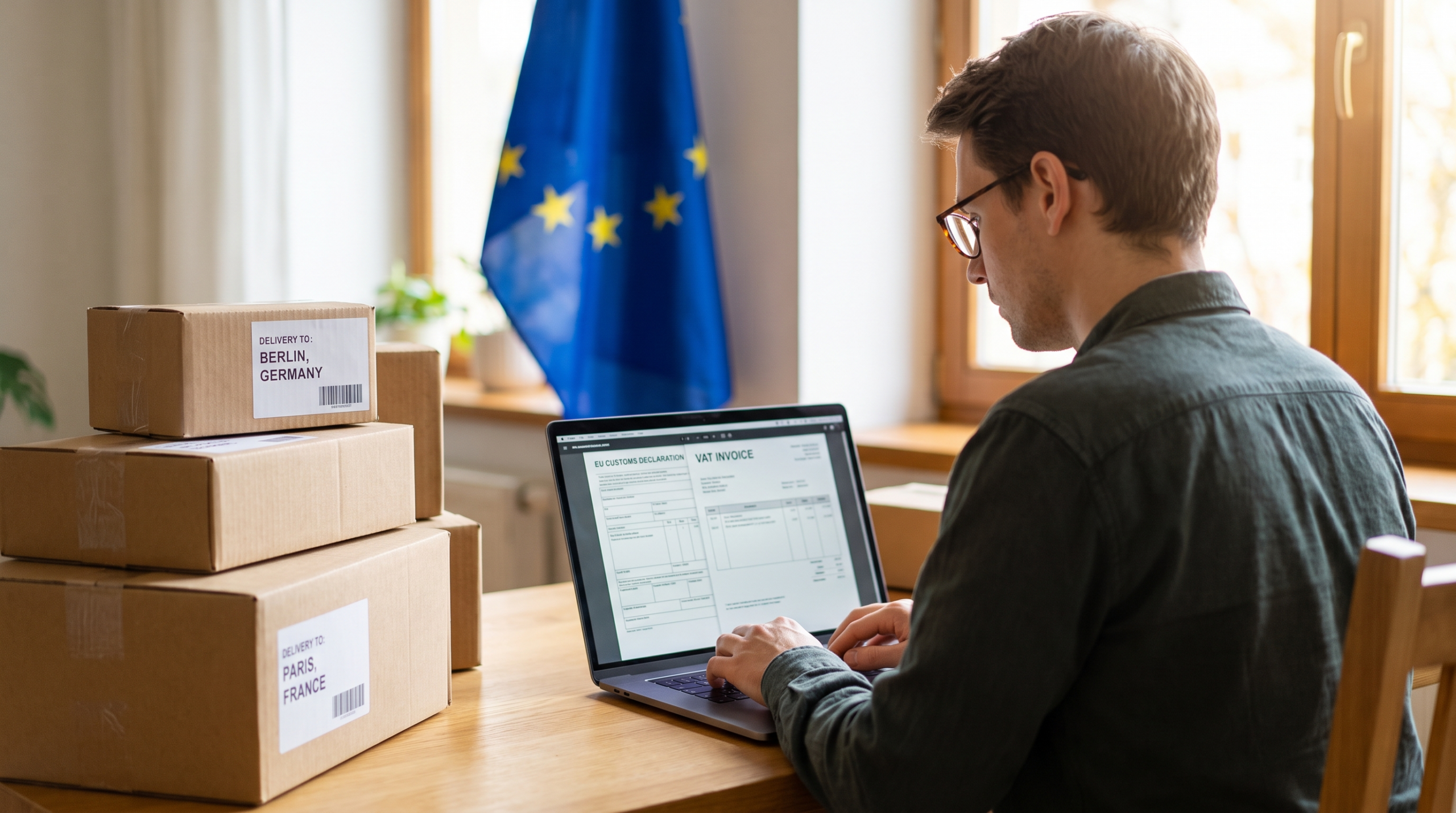

En 2026, ya no existen los paquetes pequeños exentos de impuestos. Estados Unidos eliminó la cláusula de minimis para todos los países y, a partir del 1 de julio de 2026, la UE aplica un arancel fijo de 3 € por tipo de artículo a los paquetes de menos de 150 €, con una tasa de gestión adicional de 2 € por artículo prevista para noviembre. Ahora, todos los pedidos transfronterizos conllevan aranceles, impuestos y tasas que alguien debe pagar.
Esa persona es o bien tu cliente —sorprendido al recibir una factura de corretaje— o bien tu proceso de pago, que muestra el costo total por adelantado. La diferencia entre estas dos experiencias es ahora uno de los principales factores de conversión en el comercio electrónico internacional.
Las cifras que figuran a continuación son valores de referencia orientativos; los aranceles, tasas y tarifas reales varían según el producto, el destino, la compañía transportista y el acuerdo.
Lo que realmente incluye el costo de desembarque
El costo de entrega es el precio real, puerta a puerta, de un pedido internacional. Para un envío transfronterizo típico en 2026, se desglosa de la siguiente manera:
- Precio del producto — su precio indicado;
- Envío — la tarifa del operador para el servicio elegido;
- Deberes — según el código HS, el origen del producto y el arancel de destino (o esquemas de tarifa plana como el nuevo de la UE de 3 € por tipo de artículo inferior a 150 €);
- impuestos — IVA, GST o impuesto sobre las ventas al tipo impositivo de destino;
- Honorarios — comisiones de corretaje o desembolso, y nuevas tarifas de gestión por línea, como los 2 € previstos por la UE.
Tenemos un pedido de $60 prendas para Europa; esas últimas tres líneas pueden fácilmente sumar de $15 a $25. Si los compradores lo descubren al momento de la entrega en lugar de al finalizar la compra, no solo se pierde el pedido, sino que a menudo se pierde al cliente y se debe pagar por la devolución del paquete rechazado.
Por qué los impuestos ocultos acaban con la conversión
Los datos al respecto son inusualmente consistentes:
- Alrededor de 471.030 compradores internacionales abandonan sus carritos de compra debido a aranceles e impuestos inesperados que se aplican durante o después del proceso de pago.
- Hasta el 731% de los compradores en línea citan la incertidumbre sobre los costos totales como la razón principal para no completar una compra.
- Los comerciantes que muestran el costo final exacto al momento de pagar informan que el abandono de carritos internacionales disminuye hasta en 431 TP3T, y los programas DDP (Entrega con Impuestos Pagados) por sí solos están asociados con una reducción de aproximadamente 221 TP3T en el abandono.
Tras la compra, las consecuencias son igualmente graves: un cargo inesperado al recibir el paquete es uno de los indicadores más fiables de rechazo de la entrega, devoluciones de cargo y reseñas de una estrella para los pedidos internacionales.
DDP vs DDU: ¿quién paga y cuándo?
Mostrar el costo de entrega suele ir de la mano con el envío DDP (Entrega con derechos no pagados): usted cobra los aranceles e impuestos al momento de la compra y los remite, por lo que el cliente no paga nada al momento de la entrega. DDU (Entrega con derechos no pagados) traslada el pago al destinatario, junto con la tarifa de desembolso del transportista.
- DDP: Mayor importe total en el carrito de compra, cero sorpresas, menos paquetes rechazados, mejores reseñas. La recomendación por defecto para el comercio electrónico de consumo en 2026.
- DDU: El precio indicado en la etiqueta es más bajo al momento de la compra, pero el destinatario paga aranceles y una comisión de corretaje (generalmente de $10 a $30) antes de la entrega. Aceptable para compradores B2B que lo esperan; arriesgado para los consumidores.
Para los pedidos con destino a la UE, combinar el DDP con el registro IOSS (para los valores que cumplan los requisitos) mantiene el cobro del IVA en el momento del pago y agiliza el despacho de aduanas.
Cómo obtener el costo final exacto al momento de pagar.
La precisión es lo que diferencia un proceso de pago que genera confianza de uno que podría derivar en una demanda. Cuatro pilares fundamentales:
- Códigos HS limpios en cada SKU. El cálculo de los aranceles comienza con la clasificación. Los productos mal clasificados conllevan cotizaciones erróneas, retrasos en la aduana y sanciones.
- Un motor de cálculo de aranceles e impuestos. Las funciones nativas de Shopify para el cálculo de aranceles, las API de las empresas de transporte y las herramientas específicas para transacciones transfronterizas pueden ofrecer estimaciones en tiempo real; elige la que cubra tus principales destinos y que se actualice para reflejar cambios como el régimen de arancel único de la UE para 2026.
- Valores y orígenes declarados con exactitud. El rendimiento del motor depende directamente de la calidad de los datos de su producto; el país de origen determina las tarifas preferenciales en virtud de los acuerdos comerciales.
- Una política de reserva. En casos excepcionales, decida quién asume las pequeñas diferencias de cálculo. Muchos vendedores prefieren asumir las diferencias de unos pocos dólares en lugar de facturar a los clientes posteriormente.
Convertir la transparencia en un argumento de venta
Los comerciantes que se adaptaron más rápido en 2026 no ocultan las nuevas tarifas, sino que promocionan la ausencia de sorpresas: «Todos los aranceles e impuestos incluidos. Nada que pagar al recibir el pedido». Esa simple frase, ubicada cerca del cálculo del costo de envío y repetida en la confirmación del pedido, convierte a los usuarios internacionales ansiosos en compradores y reduce las consultas de soporte sobre «¿qué es esta tarifa?».
Si a esto le sumamos una fecha de entrega estimada y una página de seguimiento con la marca, la experiencia de compra transfronteriza empieza a sentirse como una compra nacional, que es precisamente lo que buscan los compradores de la era post-minimis.
En resumen
El arancel mínimo ha desaparecido, las tarifas fijas se multiplican y ahora cada paquete internacional tiene su propia historia arancelaria. Los vendedores que calculan con precisión el costo total y lo muestran al finalizar la compra están ganando los pedidos que sus competidores pierden en la puerta.
En Aquí estamos, Ayudamos a los vendedores de comercio electrónico a realizar envíos internacionales con la documentación adecuada, la gestión de aranceles y las tarifas de transporte correctas. Comience hoy mismo y haz que los cargos sorpresa sean problema de tu competencia, no tuyo.