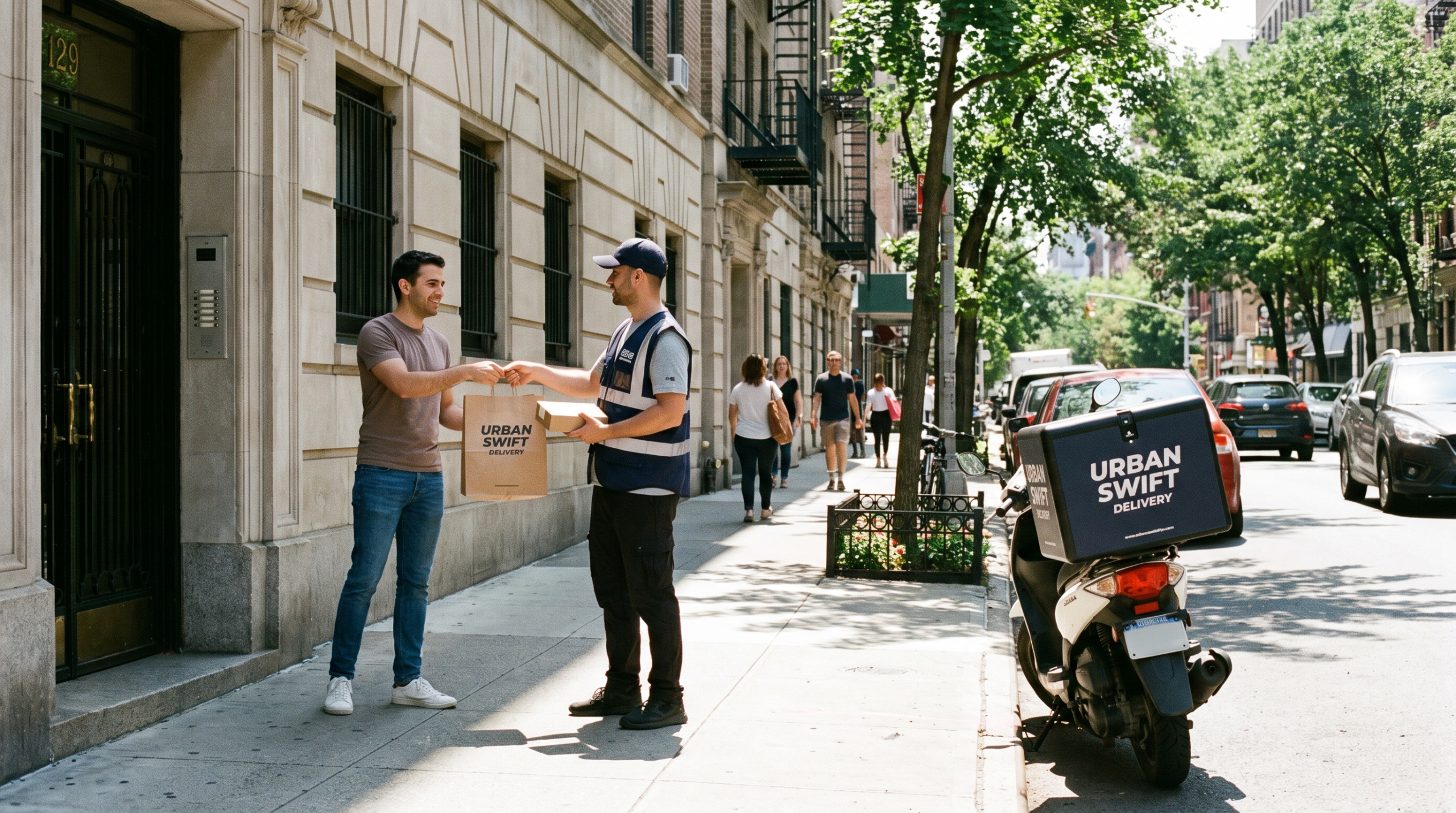
For most of the last decade, same-day delivery was a line item only Amazon and Walmart could afford. That changed in 2026 — not because the cost came down, but because the plumbing got easy. DoorDash became a native Shopify sales channel in July, Uber Direct opened to Shopify Plus merchants across the US, Canada and France, and onboarding dropped from weeks to days.
Which creates a new problem. The question is no longer can you offer same-day delivery. It’s whether the orders it wins are worth more than the margin it burns.
Here are the actual numbers, the two models that work, and the store profiles where same-day is a trap.
What same-day delivery costs in 2026
Same-day runs roughly $8 to $15 per order above standard shipping, and the trend is the wrong way: the median cost per delivery rose about 12% in 2026, with one in five delivery operators reporting increases above 20%.
Consumer-facing fees, meanwhile, sit in a much narrower band — typically $3.99 to $9.99 on a pay-per-order model. That gap is the whole story. On most orders, the shopper is not covering the true cost, and the difference comes out of your gross margin.
| Delivery tier | Cost to you | Typical fee charged | Your net exposure |
|---|---|---|---|
| Standard ground (3-5 day) | $6-$10 | $0-$7.99 | Bajo |
| Expedited (2-day) | $12-$20 | $9.99-$14.99 | Moderate |
| Same-day / local courier | $14-$25 | $3.99-$9.99 | $5-$15 per order |
Figures are indicative and vary heavily by market density, drop distance, basket size and your negotiated terms with the courier network.
The two models, and why they behave differently
1. White-label courier (Uber Direct, Roadie, local fleets)
The delivery happens under your brand. The customer orders on your site, gets your tracking page, and a courier shows up. You keep the customer relationship and the data. You also carry the full cost and the full service risk — a late or failed drop is your support ticket.
This is the right model if same-day is a premium option on your own storefront and your AOV can absorb $10-$20 of delivery cost.
2. Marketplace channel (DoorDash, Instacart)
Your catalog syncs to their app, and the order originates on their platform. You gain reach — DoorDash alone puts a merchant in front of roughly 42 million monthly users — but you pay a commission, and the buyer is arguably theirs, not yours.
This is the right model if you have physical locations with sellable inventory and you’re treating same-day as customer acquisition rather than a fulfillment upgrade.
The two are not mutually exclusive, and plenty of brands run both: marketplace for discovery, white-label for repeat buyers.
When same-day actually pays
Same-day economics work when at least two of these are true:
- Your AOV is above roughly $75. A $12 net delivery cost is 16% of a $75 order and 48% of a $25 order. Below that line, the math rarely recovers.
- Your inventory sits close to your buyers. Stores with retail locations or a metro warehouse are already positioned. A single rural 3PL is not.
- Your category is urgency-driven. Pet supplies, beauty, supplements, replacement parts, gifts, anything a buyer needs today. Furniture and apparel usually aren’t.
- Your competitors already offer it. In a category where same-day is table stakes, the cost of not offering it is the order itself, not the margin.
Conversely, if you ship low-AOV commodity items nationwide from one warehouse, same-day is a distraction. Your conversion gains will come from accurate delivery dates and a sensible free-shipping threshold, not from a courier.
The margin math, worked
Run this before you enable anything. Take 100 orders that would qualify for same-day:
| Aporte | Example |
|---|---|
| Qualifying orders | 100 |
| Average order value | $95 |
| Gross margin | 45% → $42.75/order |
| Same-day cost to you | $16/order |
| Fee collected from buyer | $7.99/order |
| Net margin hit | $8.01/order → $801 total |
| Break-even incremental orders needed | ~19 additional orders |
So the real question becomes: does offering same-day generate 19 more orders per 100 than you’d otherwise get? If your category has genuine urgency, often yes. If it doesn’t, you’ve just paid $801 to make existing customers slightly happier.
7 rules for launching same-day without wrecking margin
- Set a minimum basket. Gate same-day behind an AOV threshold — typically 1.5 to 2× your normal average. This alone fixes most of the margin problem.
- Charge closer to true cost. The gap between $7.99 and $16 is a subsidy. Buyers who genuinely need it today will pay $12.99; the ones who won’t were never urgent.
- Limit the radius. Cost scales with distance. A tight metro radius keeps cost per drop predictable; a generous one imports every expensive outlier.
- Cap the delivery window. Offering same-day until 6pm invites late-afternoon orders that cost the most to fulfill. A 1pm cutoff protects both cost and reliability.
- Start with one market. Run a single metro for 60 days, measure incremental orders and cost per drop, then expand on evidence rather than enthusiasm.
- Instrument failure, not just success. Track failed and redelivered drops separately. Same-day failures cost more than standard ones and hit reviews harder.
- Don’t cannibalize your own two-day. If shoppers switch from a free 2-day option to a $7.99 same-day option you’re subsidizing, you’ve converted profitable orders into unprofitable ones.
What to measure after 60 days
Three numbers tell you whether to keep it:
- Incremental order rate. Not total same-day orders — additional ones. Compare conversion on same-day-eligible zip codes against comparable zips without it.
- Blended cost per drop. Including failed deliveries, redelivery and support time. It will be higher than the quoted rate.
- Repeat rate of same-day buyers. This is the one that justifies the subsidy. If same-day buyers return meaningfully more often, the per-order loss buys lifetime value. If they don’t, it doesn’t.
En resumen
The integrations that landed in 2026 removed the technical excuse for not offering same-day delivery. They did not remove the economic one. Same-day is a margin decision dressed up as a technology decision, and the stores that win with it are the ones that gate it behind a basket minimum, price it near cost, and limit it to a radius they can actually serve.
Test one market, measure incremental orders honestly, and expand only where the number holds.
Need the rest of your shipping stack to earn its keep too? Aquí estamos helps ecommerce sellers compare carriers, cut surcharges and build a fulfillment setup that protects margin. Get started and see where your delivery costs are leaking.
All costs and fee ranges are indicative and vary by market, courier network, drop density, basket profile and your negotiated agreement. Confirm current pricing with each provider before launching.