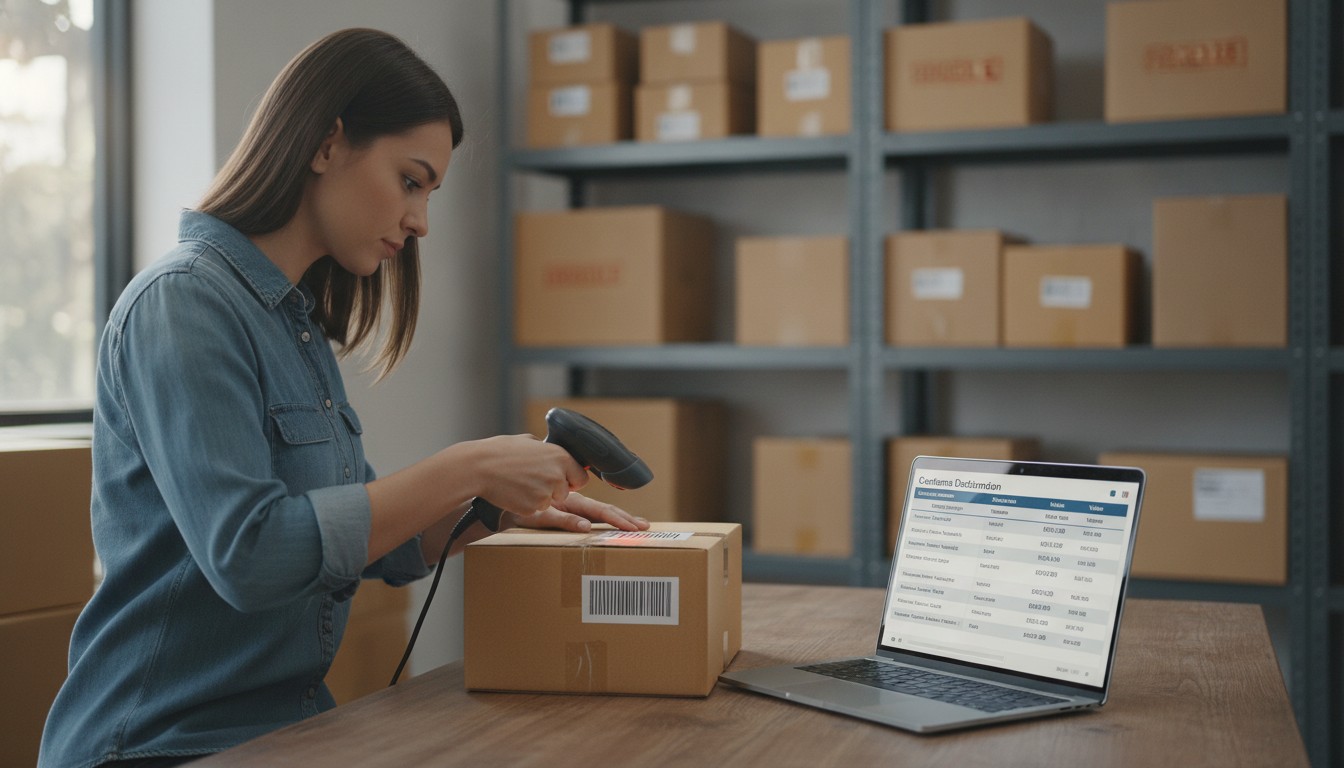
Every ecommerce seller obsesses over conversion, ad spend and product pages. Far fewer think about the single field that quietly drains margin on every order: the shipping address. In 2026, bad address data is one of the most expensive — and most preventable — costs in online retail.
Up to 20% of ecommerce packages miss the customer on the first delivery attempt, and as much as 25% of delivery issues trace back to incorrect address data. Each failure triggers redelivery fees, correction surcharges, support tickets and, worst of all, a lost customer. Address validation stops most of it before the order is even placed.
Here’s what bad addresses really cost in 2026, how validation works, and how to deploy it without hurting conversion.
What address validation actually does
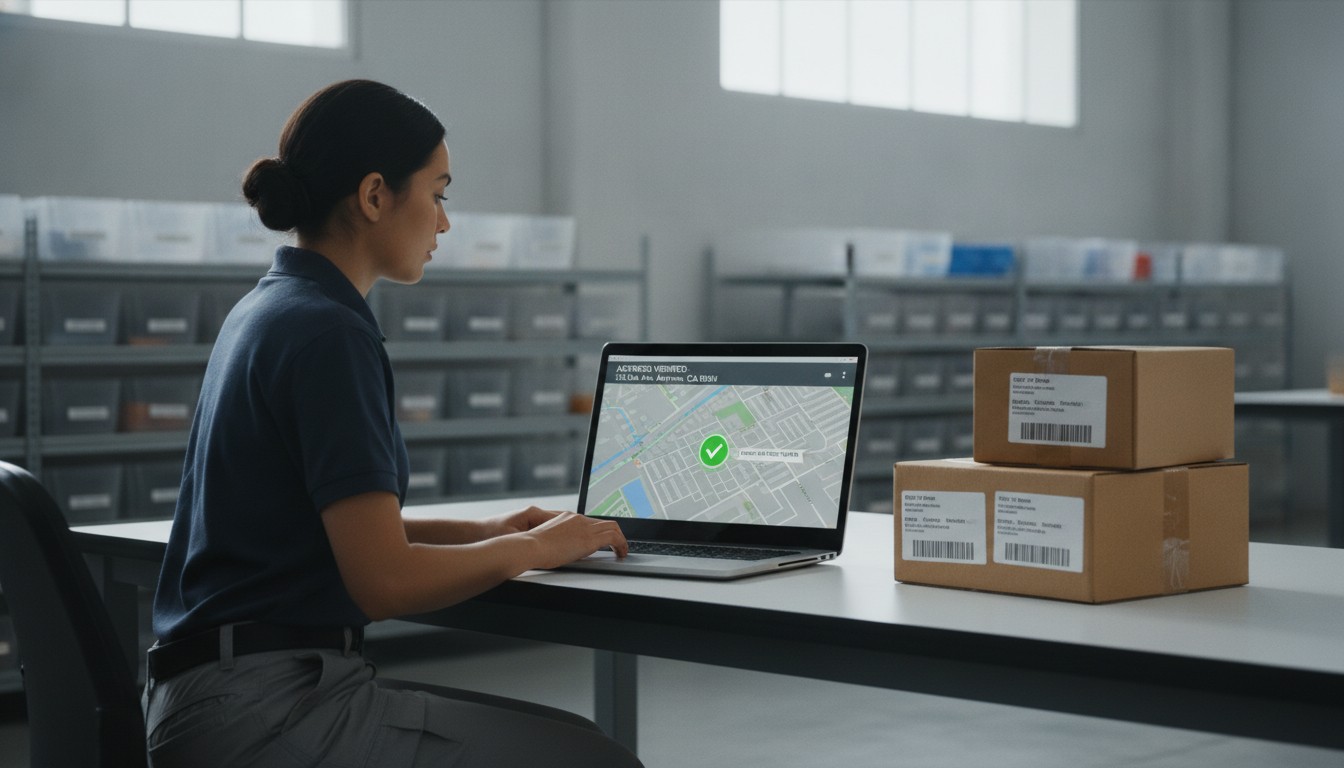
Address validation (or verification) checks a customer’s entered address against an authoritative postal database in real time — typically at checkout. It confirms the address exists, standardizes the format, corrects typos, fills missing components like ZIP+4, and flags undeliverable or mismatched entries before the order is submitted.
The difference between validation and a simple text field is the difference between catching an error for $1 and paying $100 to clean up after it.
The real cost of a bad address
The numbers are stark once you add them up:
- Failed delivery cost: roughly $17 per failed delivery in redelivery, handling and labor.
- Carrier correction fees: an undeliverable package typically incurs $15–$25 in extra costs, including address correction fees of $15–$20.
- Total surcharge exposure: bad addresses can cost up to $24 per shipment in surcharges and delays.
- Scale it up: a retailer doing 8,000 orders a month with a 4% address-error rate burns roughly $5,700 in avoidable fulfillment costs every month.
And that’s before the hidden cost: 85% of online shoppers won’t buy from you again after a bad shipping experience. A single failed delivery can erase the lifetime value of a customer you paid to acquire.
The 1-10-100 rule
Data-quality professionals use a simple framework that explains why validation pays for itself instantly. It costs about $1 to validate an address at the point of entry, around $10 to correct it later in batch processing, and more than $100 if it’s never corrected and the shipment fails outright.
The lesson is unambiguous: catch errors at checkout, not in the warehouse and definitely not on the delivery truck. Every step you let a bad address travel multiplies its cost by an order of magnitude.
Why 2026 makes this urgent
Three forces converged this year to make address accuracy a bottom-line issue rather than an ops nicety:
- Surcharges are climbing. Address correction and delivery-area fees rose with the 2026 rate increases, so each bad address now costs more than it did last year.
- Customs demands precision. With de minimis exemptions gone in major markets, international parcels need complete, accurate consignee data or they stall in customs — turning an address typo into a multi-week delay.
- Customer patience is gone. Two-day delivery is the baseline expectation. A failed first attempt doesn’t just cost money; it breaks the promise that drove the sale.
How to deploy address validation the right way
1. Validate at checkout, in real time
The highest-ROI placement is the checkout form. Real-time verification with autocomplete suggestions corrects errors while the customer is still present to confirm — no support ticket required. It also speeds up checkout, which helps conversion rather than hurting it.
2. Standardize, don’t just reject
Good validation suggests the correct address instead of blocking the order. Hard rejections frustrate customers and cause abandonment. Offer the corrected version (« Did you mean…? ») and let the shopper confirm in one click.
3. Verify both billing and shipping
Mismatched billing and shipping addresses are a leading signal of both delivery failure and fraud. Validating both cuts chargebacks and failed deliveries at the same time.
4. Choose the right verification source
Options range from USPS and Google to dedicated providers like Smarty. For domestic-only sellers, USPS data is often enough; high-volume or international sellers benefit from a provider with global coverage and richer correction logic. Match the tool to your shipping footprint.
5. Clean your existing database
Validation isn’t only for new orders. Batch-cleanse your stored customer addresses to catch repeat buyers whose details have gone stale, and to fix subscription orders before the next cycle ships.
6. Track your address-error rate
You can’t fix what you don’t measure. Monitor the percentage of orders flagged or returned as undeliverable, and watch it fall after deployment. That single metric ties validation directly to dollars saved.
The bottom line
Address validation is one of the rare ecommerce investments that cuts costs, lifts customer retention and speeds checkout all at once. At roughly $1 to validate versus $17–$100 to recover from a failure, the math isn’t close. For a store shipping thousands of orders a month, it’s the difference between protecting your margin and quietly leaking it on every parcel.
Ready to stop paying for bad addresses? See how HereWeShip helps ecommerce sellers ship accurately and keep more of every order’s margin.
All cost figures are indicative and vary by carrier, destination, order volume and the verification provider you choose.