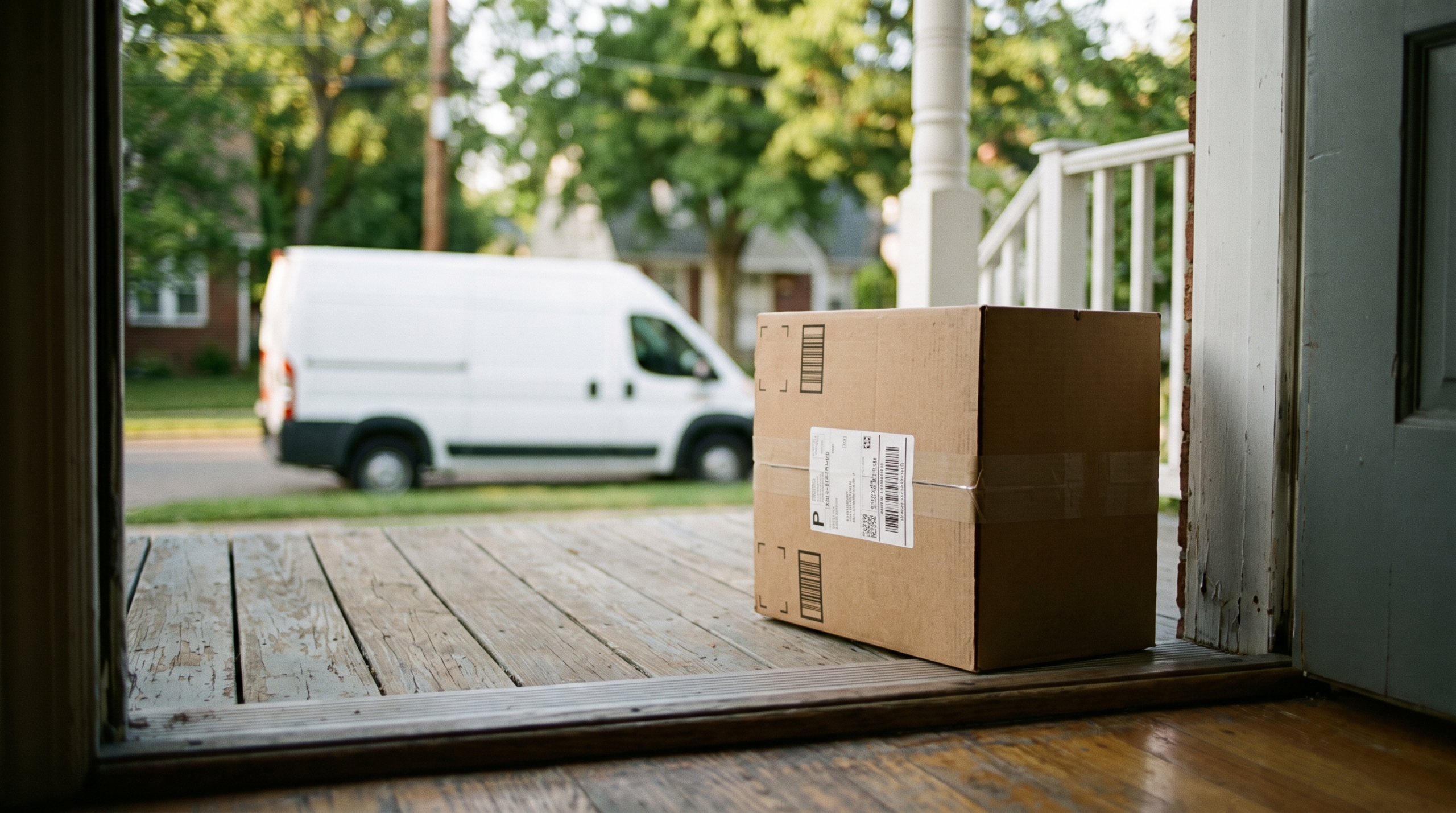

Multi-Channel Fulfillment is Amazon selling you its warehouse without selling you its marketplace. Your Shopify, TikTok Shop, eBay and wholesale orders ship out of the same FBA inventory pool, on Amazon’s carrier network, in plain boxes — and you pay no referral fee on any of it.
The catch has always been the price. MCF outbound fees typically run 30% to 50% above the equivalent FBA fulfillment fee for the same unit. For 2026 Amazon has moved on that, launching a preferred pricing program on January 15, 2026 with discounts of up to 15% on outbound fees plus up to $1 per shipped unit in FBA credits.
Here is what Amazon MCF fees actually cost in 2026, and the break-even against a conventional 3PL.
2026 MCF outbound fees: standard (3-day) delivery
Non-peak rates, January 15 to October 14, 2026. The per-unit price drops sharply as units per shipment rise — this is the single most important thing to understand about MCF pricing.
| Size tier | 1 unit | 2 units | 3 units | 4+ units |
|---|---|---|---|---|
| Small standard (≤4 oz) | $7.34 | $4.98 | $4.10 | $3.64 |
| Large standard (1–2 lb) | $10.64 | $7.19 | $5.90 | $5.25 |
| Large bulky (to 30 lb) | $18.43 + $0.77/lb | $13.58 + $0.71/lb | $11.72 + $0.71/lb | $9.92 + $0.71/lb |
| Extra-large (to 50 lb) | $32.17 + $0.62/lb | — | — | — |
Expedited (2-day) delivery
| Size tier | 1 unit | 2 units | 3 units | 4+ units |
|---|---|---|---|---|
| Small standard (≤4 oz) | $10.70 | $6.31 | $4.78 | $3.96 |
| Large standard (1–2 lb) | $13.45 | $7.96 | $6.42 | $5.91 |
| Large bulky (to 30 lb) | $20.13 + $0.77/lb | $14.63 + $0.71/lb | $13.80 + $0.71/lb | $13.40 + $0.71/lb |
All figures are indicative. Actual fees depend on measured dimensions, weight, destination and your Seller Central rate card.
Note the shape of the expedited table: on a single small-standard unit you pay a $3.36 premium for 2-day over 3-day, but at 4+ units per shipment expedited is actually cheaper than standard. If your average order contains several units, check both — the intuition that faster costs more does not hold at the top of the table.
Storage fees are separate and they bite in Q4
| Category | Jan–Sep (per cubic foot / month) | Oct–Dec (per cubic foot / month) |
|---|---|---|
| Standard-size | $0.78 | $2.40 |
| Large bulky & extra-large | $0.56 | $1.40 |
Standard-size storage triples in the peak quarter. On top of that sit the aged inventory surcharge and the storage utilization surcharge, neither of which shows up in the outbound fee table. Anything sitting in an Amazon fulfillment center on October 1 should be there because it will sell before Christmas, not because moving it was inconvenient.
Peak surcharges
MCF applies peak fulfillment fees from October 15, 2026 through January 14, 2027, generally in the range of $0.20 to $0.35 per unit depending on size tier. It is modest relative to carrier peak demand surcharges, but it compounds with the storage increase above.
The 2026 preferred pricing program
Launched January 15, 2026, this is the meaningful change for multichannel sellers:
- Up to 15% off MCF outbound fulfillment fees, plus up to $1 in FBA credits per shipped unit.
- Two enrollment tracks: a 6-month preferred pricing period aimed at new or expanding MCF users, and a 12-month period based on sustained shipping volume.
- Benefits are calculated from recent shipping activity and applied automatically once you are enrolled — there is no separate per-order claim.
- Amazon has also waived the 5% surcharge on MCF fulfillment of Walmart orders through 2026, with the waiver confirmed through 2027.
That last point matters more than it looks. The Walmart surcharge was the specific reason many sellers kept a separate 3PL for Walmart Marketplace volume. With it waived for two years, consolidating into one inventory pool becomes defensible again.
Packaging and what the buyer sees
MCF ships in unbranded packaging where the unit qualifies on size and weight — no Amazon smile tape, no Amazon-branded box. You cannot insert your own marketing material, and you cannot brand the carton. For a DTC brand that sells an unboxing experience, this is a real cost that does not appear in any fee table.
Sellers whose products qualify for Ships in Product Packaging can also capture discounts of roughly $0.04 to $1.32 per unit depending on tier — worth certifying if your packaging is already retail-ready.
Returns
MCF return processing runs from $3.22 to $101.60 and up depending on size, and covers processing, regrading and restocking. Model this against your category’s real return rate before you compare MCF to a 3PL on outbound fees alone — on apparel at a 25% return rate, returns can be the larger line.
MCF vs a 3PL: the honest comparison
| Factor | Amazon MCF | Conventional 3PL |
|---|---|---|
| Outbound cost per standard unit | Higher; 30–50% above FBA equivalent | Typically pick fee + packaging + postage |
| Inventory pools | One pool serves Amazon and all channels | Separate stock from FBA; split forecasting |
| Delivery network | Amazon’s own; broad 2–3 day coverage | Depends on warehouse locations and carriers |
| Branding | Unbranded box, no inserts | Full branded packaging and inserts |
| Setup effort | Already live if you use FBA | Onboarding, integrations, receiving |
| Peak storage exposure | High (Q4 rates triple) | Usually flatter |
The practical rule: MCF wins when you already run FBA, your off-Amazon volume is unpredictable, and splitting inventory would cause stockouts on the Amazon channel. A 3PL wins when branding is part of the product, your volume is steady enough to forecast, or your SKUs are large and slow-moving enough that Q4 Amazon storage would hurt.
Many sellers land on both: MCF for the fast-moving, small-standard SKUs where a single inventory pool prevents Amazon stockouts, and a 3PL for the branded, bulky or slow-turning ones.
Before you commit
Pull your last 90 days of off-Amazon orders and compute average units per shipment. Then price each one against the tables above and against your current fulfillment cost. Because MCF pricing falls so steeply with units per shipment, sellers with a genuine multi-unit average order frequently find MCF competitive where a single-unit seller would not.
Then check enrollment in preferred pricing. A 15% discount on outbound, plus per-unit FBA credits, moves the break-even far enough that a comparison run in 2025 is no longer valid.
Weighing MCF against a 3PL for your catalogue? HereWeShip maps out the fulfillment mix and the carrier rates behind it, SKU by SKU. Get started at hereweship.com.
Fee figures are indicative and subject to change. Confirm current rates in Seller Central against your own account before making a fulfillment decision.