Selling across borders has never been more popular — or more paperwork-heavy. If you're shipping internationally from the US in 2026, the rules you relied on even a year ago have changed. Duty-free thresholds are vanishing, customs declarations are mandatory on far more parcels, and a single missing field can strand a shipment at the border.
The upside: international shipping is still very learnable. Once you understand the customs paperwork, who pays the duties, and how destination rules differ, you can ship abroad with the same confidence as a domestic label. This guide walks through what changed in 2026 and how to get every parcel delivered without surprise fees or delays.
Note: customs rules, thresholds, and duty rates are indicative and change often; always confirm the current requirements for your destination country and carrier before you ship.
The end of de minimis: why 2026 is different
For years, «de minimis» rules let low-value parcels clear customs duty-free with minimal paperwork. That era is closing. The United States eliminated its own $800 de minimis exemption in late 2025, so goods entering the US now face duties regardless of value — and the same tightening is spreading to the markets you ship to.
The practical takeaway for a US exporter is simple: assume your international parcels will be assessed for duties and taxes at the destination, and assume customs wants a complete, accurate declaration. The casual «just mark it as a gift» approach is exactly what gets shipments held, returned, or finished.
The paperwork every international parcel needs
Three documents and data points do most of the work at the border:
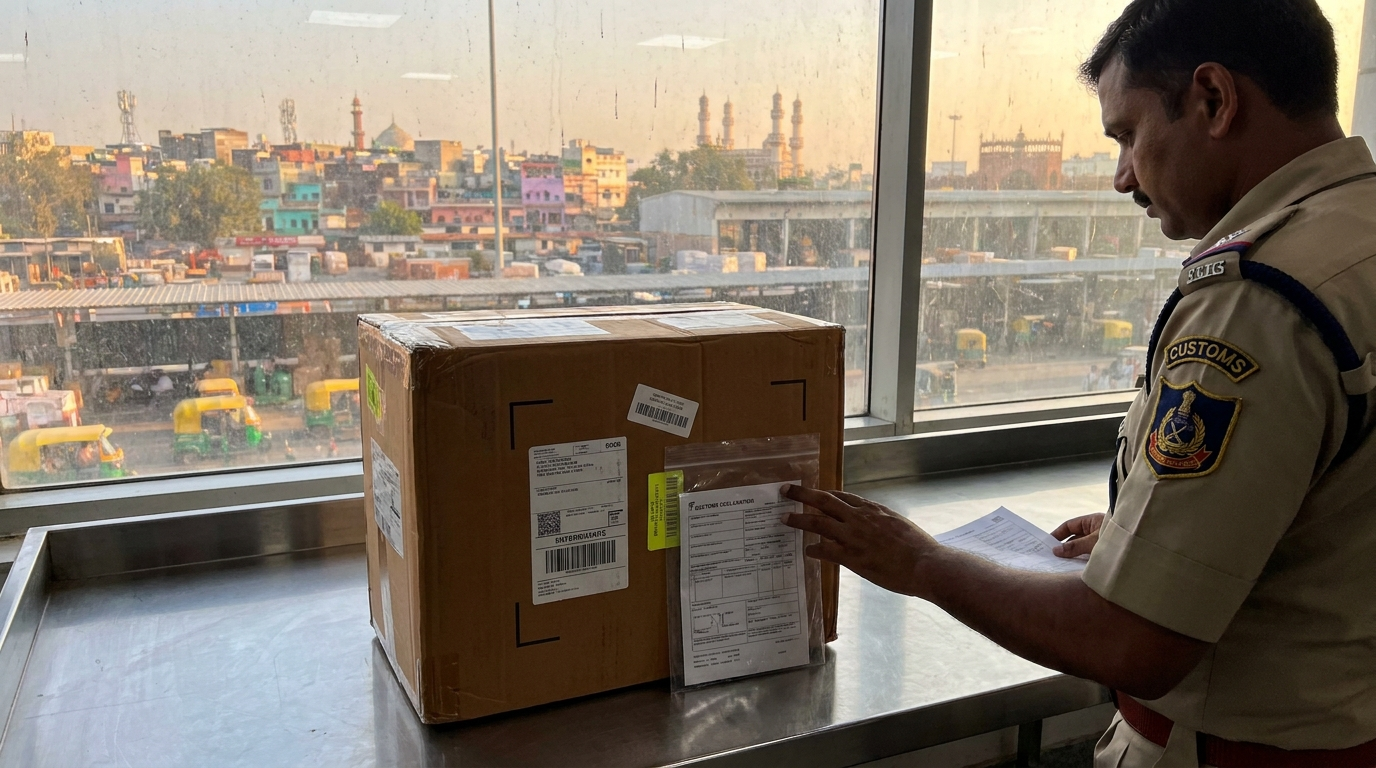
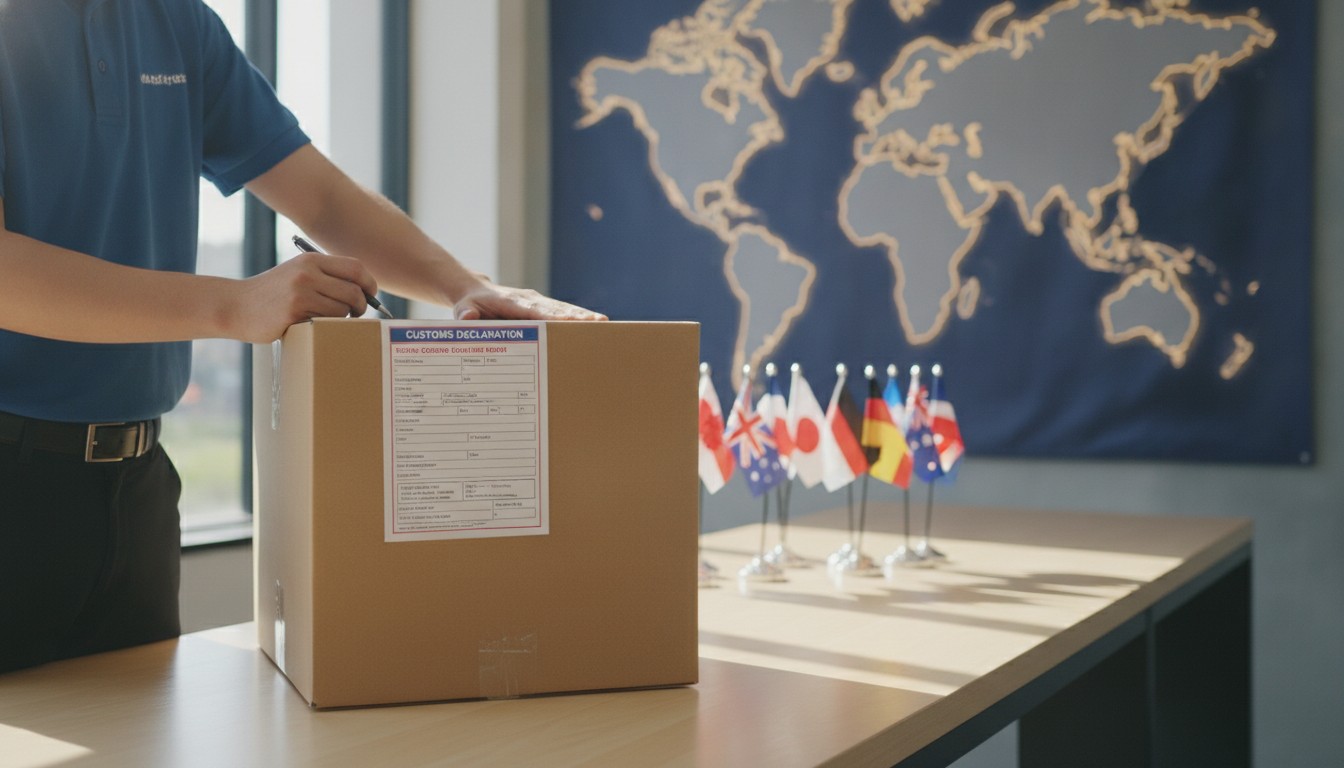
- Commercial invoice. The single most important document. It lists the shipper and recipient, an honest description of the goods, the quantity, the value, and the country of origin. Vague descriptions like «samples» or «parts» invite inspection and delay.
- HS (Harmonized System) codes. Every product has a tariff classification code that determines the duty rate. Getting it right is how customs — and your customer — knows what to charge.
- EEI / export filing. When a single commodity in your shipment is valued over $2,500 USD, US exporters must file Electronic Export Information in the Automated Commercial Environment (ACE), either directly or through the carrier.
Accuracy beats speed here. An undervalued or mislabeled parcel may move faster initially, but it exposes you to penalties, seizure, and angry customers hit with unexpected bills.
DDP vs. DDU: who pays the duties?
This single choice shapes your customer's experience more than the shipping speed does.
| Term | Who pays duties & taxes | Best for |
|---|---|---|
| DDP (Delivered Duty Paid) | You, the sender, prepay at checkout | E-commerce and a smooth, no-surprise delivery |
| DDU / DAP (Delivered Duty Unpaid) | The recipient pays on arrival | Lower upfront cost, B2B buyers who clear their own customs |
With DDU, the courier contacts your customer for duties before releasing the parcel — a common reason packages are refused and returned. For consumer sales, DDP almost always wins because the buyer sees one all-in price and nothing to pay at the door.
Destination rules are tightening too
Don't assume the destination's thresholds are generous. The European Union is set to remove its €150 duty-free exemption on July 1, 2026, applying a customs duty per line item even on low-value goods. Other markets are reviewing their own de minimis levels. Before you quote a customer, check the destination country's current duty-free threshold and tax rules — what was duty-free last year may not be this year.
Choosing a career and service
For international parcels from the US you generally have four routes: the postal channel (USPS and its partners), and the integrators UPS, FedEx, and DHL Express. Postal services tend to be cheapest for small, light, low-value items but offer less tracking and slower customs handling. The integrators cost more but provide faster transit, end-to-end tracking, and built-in customs brokerage — valuable when paperwork errors are costly. Match the service to the shipment: a $30 t-shirt and a $1,500 piece of equipment should rarely travel the same way.
Your pre-ship checklist
Run through this before every international label:
- Complete commercial invoice with an honest, specific goods description;
- Correct HS code and declared value for each item;
- EEI filed if any single commodity exceeds $2,500 USD;
- Duty responsibility decided up front — DDP for consumers, DDU/DAP only when the buyer expects it;
- Destination duty-free threshold and prohibited-item rules checked;
- Recipient phone and email on the label so customs can reach them quickly.
Conclusion
International shipping in 2026 rewards preparation. With de minimis exemptions disappearing in the US and abroad, the winners are the shippers who declare accurately, classify correctly, and choose DDP to protect the customer experience. Treat customs paperwork as part of the product, not an afterthought, and borders stop being a bottleneck.
At HereWeShip, we make cross-border shipping simple — from customs documents to carrier choice — so your parcels arrive on time and without surprise fees. Get started at hereweship.com and ship internationally with confidence in 2026.