South Korea is one of the highest-value ecommerce markets a US seller can reach. Broadband penetration is near-universal, cross-border shopping is mainstream, and the KORUS free trade agreement gives American goods a de minimis threshold that most destinations cannot match.
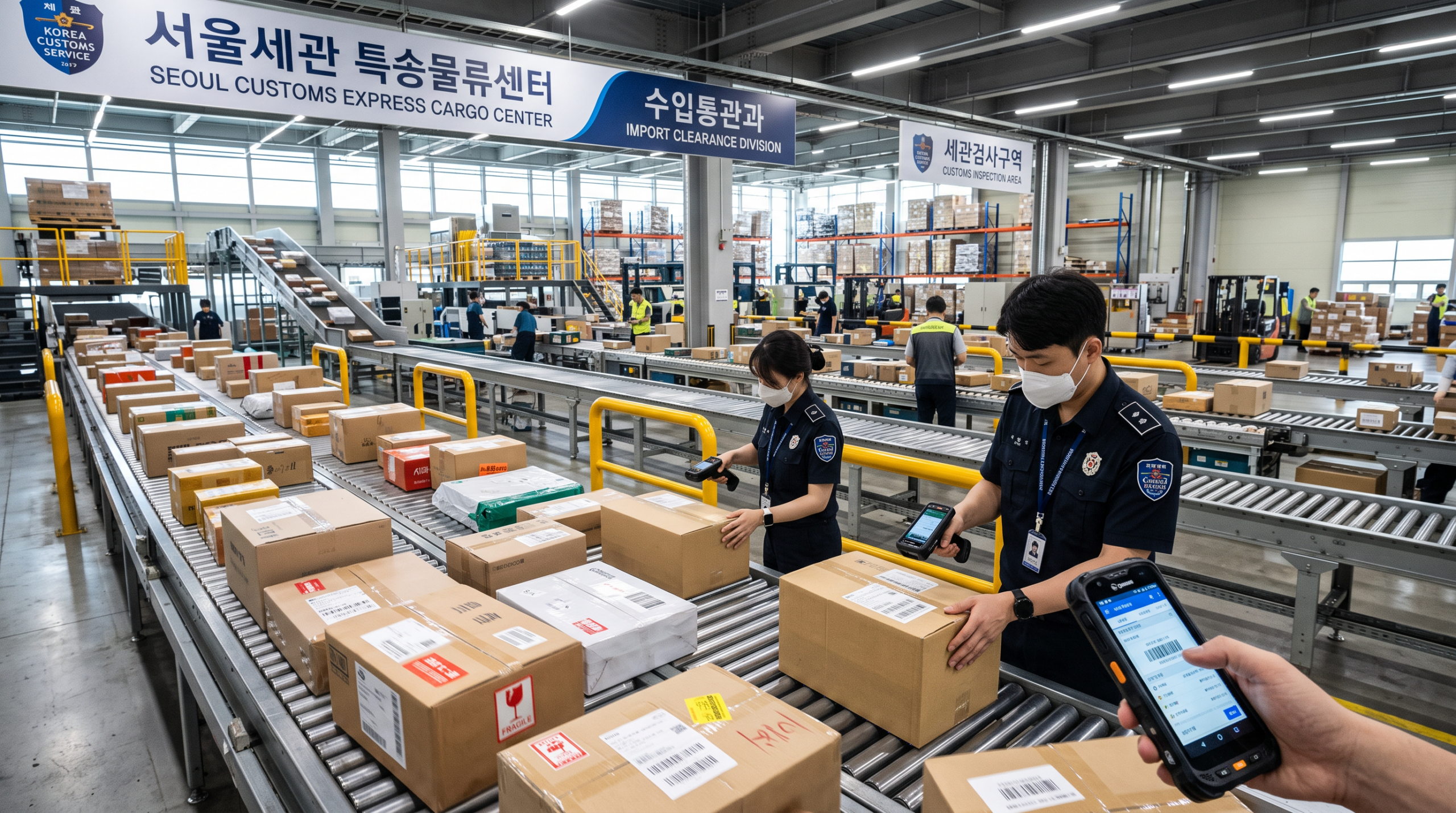
Aim shipping to South Korea has one requirement that catches sellers off guard, and it has nothing to do with duties. Korea Customs tightened its identity verification rules in February 2026, and parcels that fail the check do not clear — regardless of value, paperwork or carrier.
This guide covers what you owe, what you must collect from the buyer, and how to keep your Korean orders moving.
The $200 de minimis: your biggest structural advantage
Under the KORUS FTA, goods of US origin clear into South Korea duty-free and tax-free up to $200 USD. That threshold is roughly double what most markets offer, and it applies to the total declared value including domestic US shipping costs.
Two important qualifications:
- Tea $200 threshold applies to «list clearance» goods — the simplified category covering most clothing, electronics, accessories and books.
- For «"General clearance" items — food, supplements, cosmetics with functional claims, and medicines — the duty-free limit drops to roughly $150 USD, and additional agency approvals may apply.
Above the threshold, expect 10% VAT on the customs value plus duty based on the item's HS classification. Korean duty rates vary widely by category, but US-origin goods qualifying under KORUS often carry preferential or zero duty when the origin claim is properly made.
Threshold and rate figures are indicative and change with policy updates; confirm current values before quoting landed cost to a buyer.
PCCC: the requirement that stops parcels cold
This is the single most important operational change for anyone shipping B2C into Korea.
Every individual importing goods for personal use needs a Personal Customs Clearance Code (PCCC) — a 13-digit identifier issued by the Korea Customs Service. For B2C shipments to private consignees, the PCCC is mandatory and must be declared at import. The passport-number fallback that used to work was retired in January 2025.
What changed in February 2026
From February 2, 2026, Korea Customs strengthened PCCC verification across all B2C shipments to individual consignees — covering both de minimis entries and formally declared imports. Under the tightened rules:
- Tea consignee name, mobile phone number and delivery postal code must exactly match the details registered against the buyer's PCCC.
- A mismatch in any one of the three can hold or reject the shipment.
- PCCCs now carry a one-year validity period and require annual renewal, so a returning customer's previously valid code may have lapsed.
The practical failure mode is subtle. A buyer registers their PCCC under a Korean-script name, then checks out on your store using a romanized name and a shipping address at their office. Everything looks fine at your end. It fails at customs.
How to collect PCCC data without killing conversion
Asking for a 13-digit government code at checkout is friction. Handled poorly, it costs you the order. A few patterns that work:
- Make the field conditional. Only show the PCCC input when the shipping country is South Korea. Never surface it to your other markets.
- Explain why in one line. «Korea Customs requires this code to clear your parcel — orders without it cannot be delivered. » Korean shoppers know what a PCCC is; they just need the prompt.
- Validate the format. A PCCC starts with «P» followed by 12 digits. A simple regex check catches typos before they become customs holds.
- Ask for the name as registered. Add a note that the recipient name and phone number must match their PCCC registration, and link to the Korea Customs unipass site where buyers can check or renew.
- Store it against the customer, not just the order. Repeat buyers should not have to re-enter it — but do prompt for reconfirmation after twelve months, given the new expiry rule.
Carrier options and transit times
| Local Convenience | Typical transit | Best for | Watch for |
|---|---|---|---|
| DHL Express | 2 to 4 business days | High-value orders, fastest clearance | Highest base rate |
| FedEx International Priority | 3 to 5 business days | Reliable express with strong tracking | Remote area surcharges outside metro Seoul |
| UPS Worldwide Expedited | 3 to 6 business days | Balanced cost and speed | Brokerage on formal entries |
| USPS Priority Mail International | 7 to 14 business days | Lightweight, low-value orders | Handoff to Korea Post reduces tracking detail |
Korea's domestic delivery network is excellent — once a parcel clears customs, final-mile delivery is typically same-day or next-day nationwide. That means your transit variance is almost entirely a clearance question, which is why PCCC accuracy matters more than carrier choice.
Documentation checklist for every Korean parcel
- Commercial invoice with itemized descriptions — no generic terms like «goods» or «samples»
- HS code to at least 6 digits per line item
- Country of origin stated as the country of manufacture
- Declared value including domestic US shipping, in USD
- Recipient's PCCC, mobile number and postal code, matching their registration
- KORUS origin declaration where you are claiming preferential treatment
Common mistakes that cost Korean sellers money
- Splitting an order to stay under $200. Korea Customs treats same-day, same-consigned shipments as a single entry. Splitting looks like evasion and invites inspection.
- Misreading the category. Selling a vitamin or a functional cosmetic under the $200 list-clearance assumption instead of the stricter general-clearance rules is a frequent and expensive error.
- Ignoring PCCC expiry. A repeat customer from 2025 may have a lapsed code in 2026.
- Shipping DDU on consumer orders. Surprise VAT bills drive refusals. Quote landed cost at checkout and ship DDP where your carrier supports it.
- Understating value. Korean customs valuation is well enforced, and undervaluation voids insurance while triggering penalties.
Get Korean orders moving
South Korea rewards sellers who get the details right: a generous $200 threshold, fast domestic delivery and buyers who are comfortable purchasing from US stores. The barrier is not tariffs — it is a 13-digit code and three matching data fields.
At HereWeShip, we help ecommerce sellers compare international carrier rates, structure landed-cost quotes and get their customs data right before the parcel leaves the warehouse.
Compare international shipping rates at hereweship.com and start shipping to South Korea with confidence.