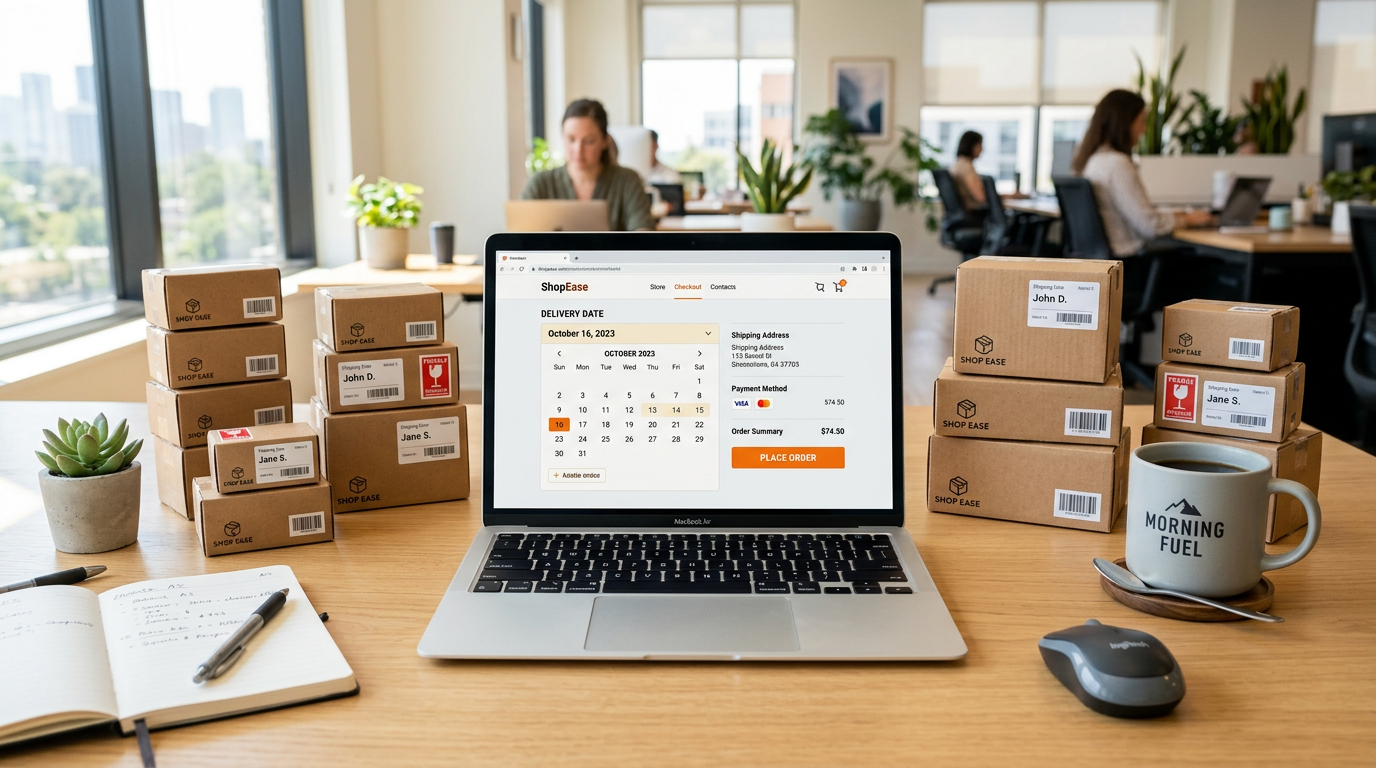
Every parcel your store ships makes two statements at once: one to the carrier’s billing system, and one to your customer. Get the first wrong and you overpay on every label. Get the second wrong and you miss the cheapest retention channel you own — the box itself.
In 2026, packaging sits at the intersection of two of the biggest forces in online retail: rising shipping costs driven by dimensional-weight pricing, and customer expectations shaped by thousands of unboxing videos. The good news is that the same discipline — designing your packaging deliberately — wins on both fronts.
This guide covers the numbers behind right-sizing, what branded packaging actually returns, and a practical playbook for online sellers of any size.
The cost side: you’re paying for air
UPS, FedEx and USPS all bill the greater of actual weight and dimensional (DIM) weight — the volume of your box divided by a DIM divisor. Ship a phone case in a shoebox-sized carton and you pay for the empty space, not the product. Industry analyses put the penalty at $3–$8 extra per parcel on a typical ground shipment, and shipping a small item in an oversized box can cost 30–50% more than it should.
The fix is right-sizing: matching the box to within 1–2 inches of product dimensions with appropriate void fill. Sellers who systematically right-size report 15–30% reductions in carrier shipping costs on affected orders. For a store spending $10,000 a month on shipping, that’s $1,500–$3,000 back — every month.
Cost figures are indicative and vary by carrier, service level, DIM divisor and your negotiated rates.
Quick DIM math every seller should run
Measure your three best-selling products, then measure the boxes they ship in. Divide box volume (L × W × H in inches) by 139 — the common divisor for UPS and FedEx retail rates. If that number exceeds the actual weight in pounds, DIM pricing is inflating every one of those labels, and a smaller box or a poly mailer pays for itself immediately.
The revenue side: unboxing is a marketing channel
Packaging is the one brand touchpoint with a 100% open rate. The 2026 consumer data makes the case:
- 61% of consumers say branded packaging makes them more excited to open a parcel.
- 40% of shoppers are more likely to recommend a product that arrives in gift-like, branded packaging.
- Around 44% of shoppers share unboxing experiences on social media — free reach you didn’t pay for.
- Branded packaging programs are associated with 15–25% higher repeat purchase rates.
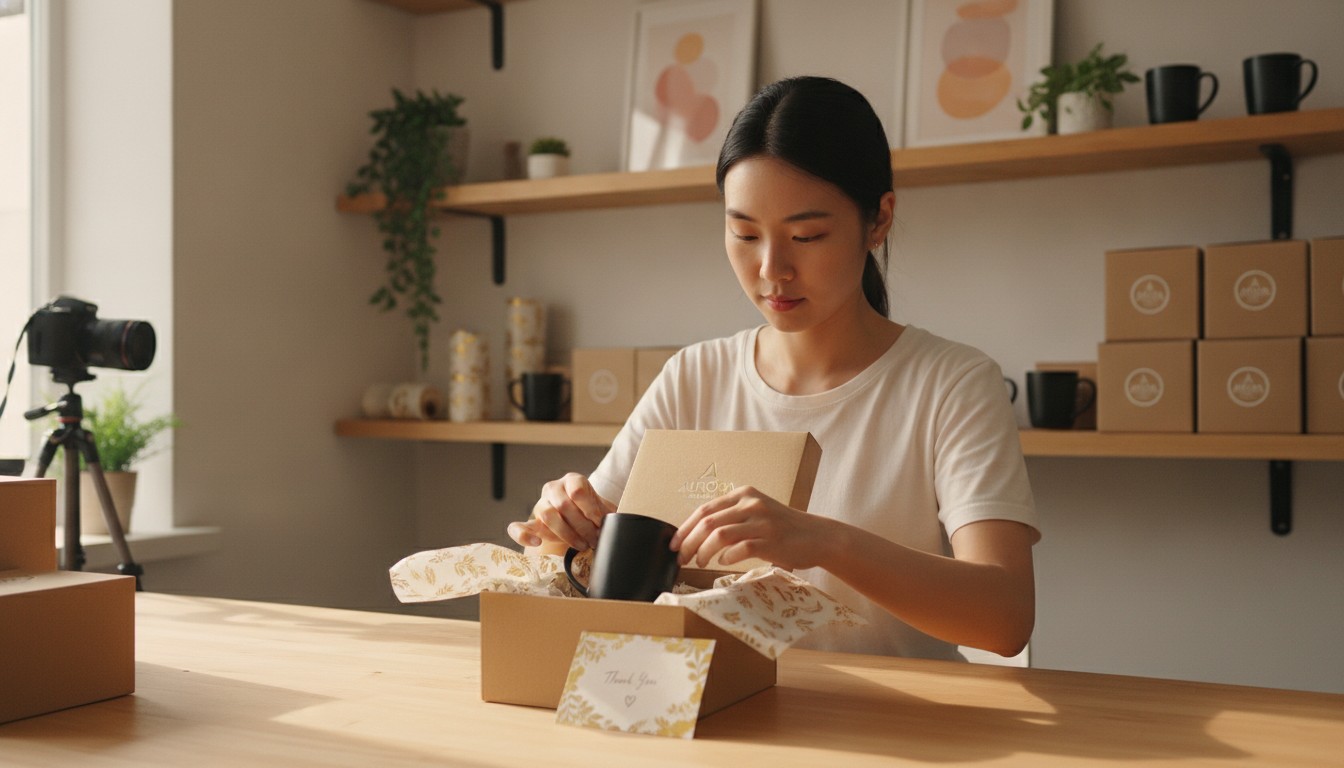
None of this requires luxury rigid boxes. Custom tissue paper, a branded sticker, one insert card with a clear next action (a discount code, a care guide, a review request) — these cost well under a dollar per order at modest volumes and transform a brown box into a brand moment.
Balancing the two: a packaging playbook for 2026
1. Build a small box library
Three to five box sizes plus two mailer sizes cover most catalogs. Map every SKU (and your most common multi-item combinations) to the smallest safe option. Review the mapping quarterly as your catalog changes.
2. Switch to mailers wherever products allow
Poly and padded mailers weigh a fraction of corrugated boxes, dodge most DIM penalties, and cut material costs. Apparel, soft goods and unbreakable accessories rarely need a box at all.
3. Brand the inexpensive surfaces first
Printed tissue, stickers and insert cards deliver most of the unboxing effect at a fraction of the cost of custom-printed cartons. Reserve fully custom boxes for high-AOV products where margins support them.
4. Make sustainability visible
Right-sizing is also an environmental story: less material, less void fill, more parcels per truck. Recyclable kraft, paper void fill and a one-line note about it on the insert card resonate with buyers — and reduce material spend rather than adding to it.
5. Protect first, always
A beautiful box that arrives crushed generates a return, a refund and a lost customer. Damage rates climb when void fill is cut too aggressively — test drops before rolling out lighter packaging, especially for fragile goods.
6. Measure the program like a channel
Track cost per order, damage rate, repeat purchase rate and social mentions before and after packaging changes. Shopify-ecosystem analyses report packaging programs returning several times their cost when repeat-purchase lift is counted — but you only capture that if you measure it.
When to revisit your packaging
Audit your packaging whenever one of these happens: carriers update DIM divisors or rates (as USPS did with its 2026 changes), your product mix shifts, your damage rate crosses 1%, or your repeat purchase rate stalls while acquisition costs climb. In practice, a twice-yearly packaging review keeps both costs and customer experience on track.
The bottom line
Packaging is not a supplies line item — it’s a lever on both sides of your P&L. Right-size to stop paying carriers for air, then spend a fraction of the savings on a branded unboxing moment that brings customers back. Few investments in ecommerce pay off twice like that.
Shipping smarter starts with the box — and with the rates behind it. HereWeShip helps online sellers compare carriers, cut per-parcel costs and deliver a better post-purchase experience on every order. See how much you could save today.