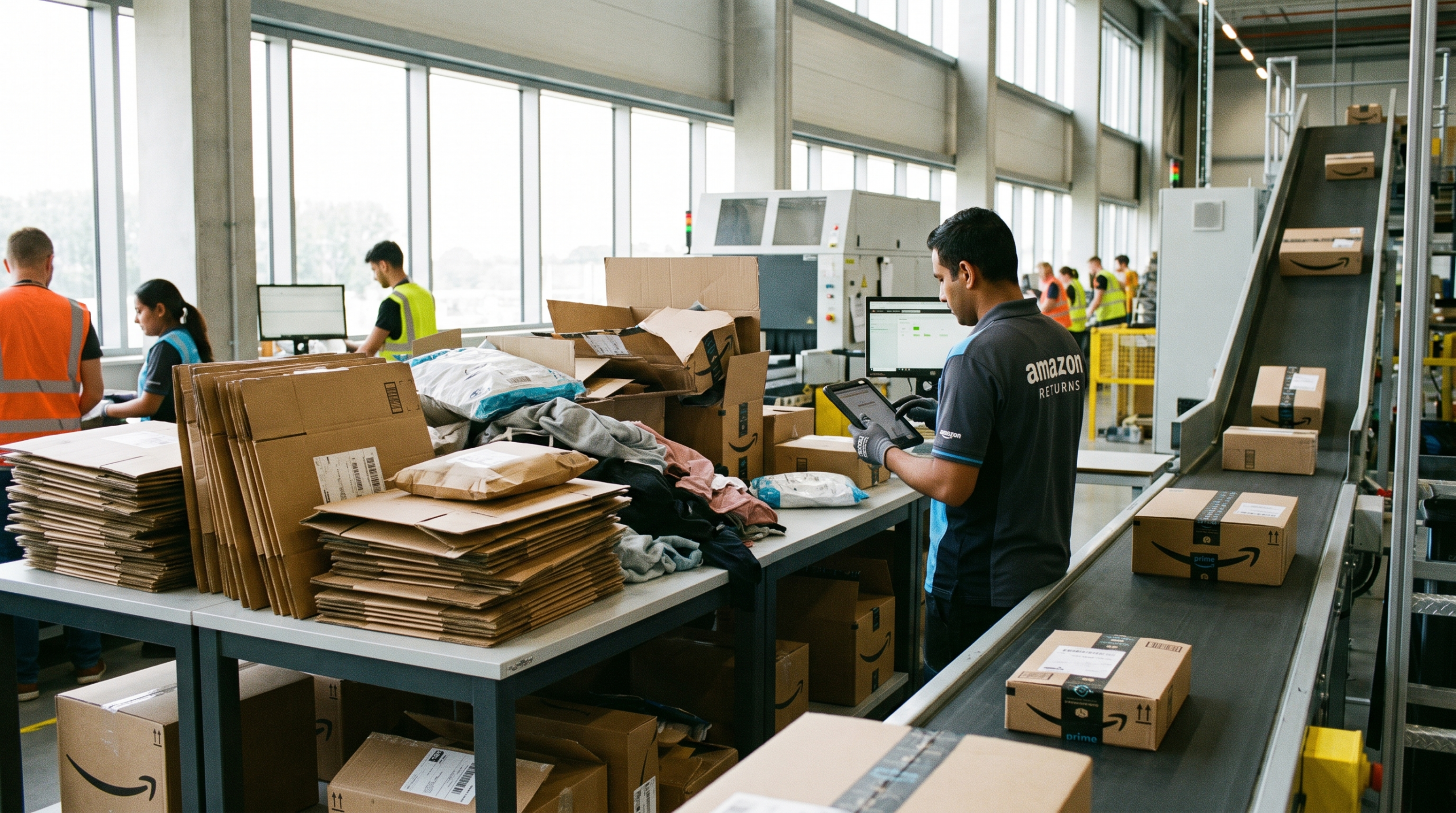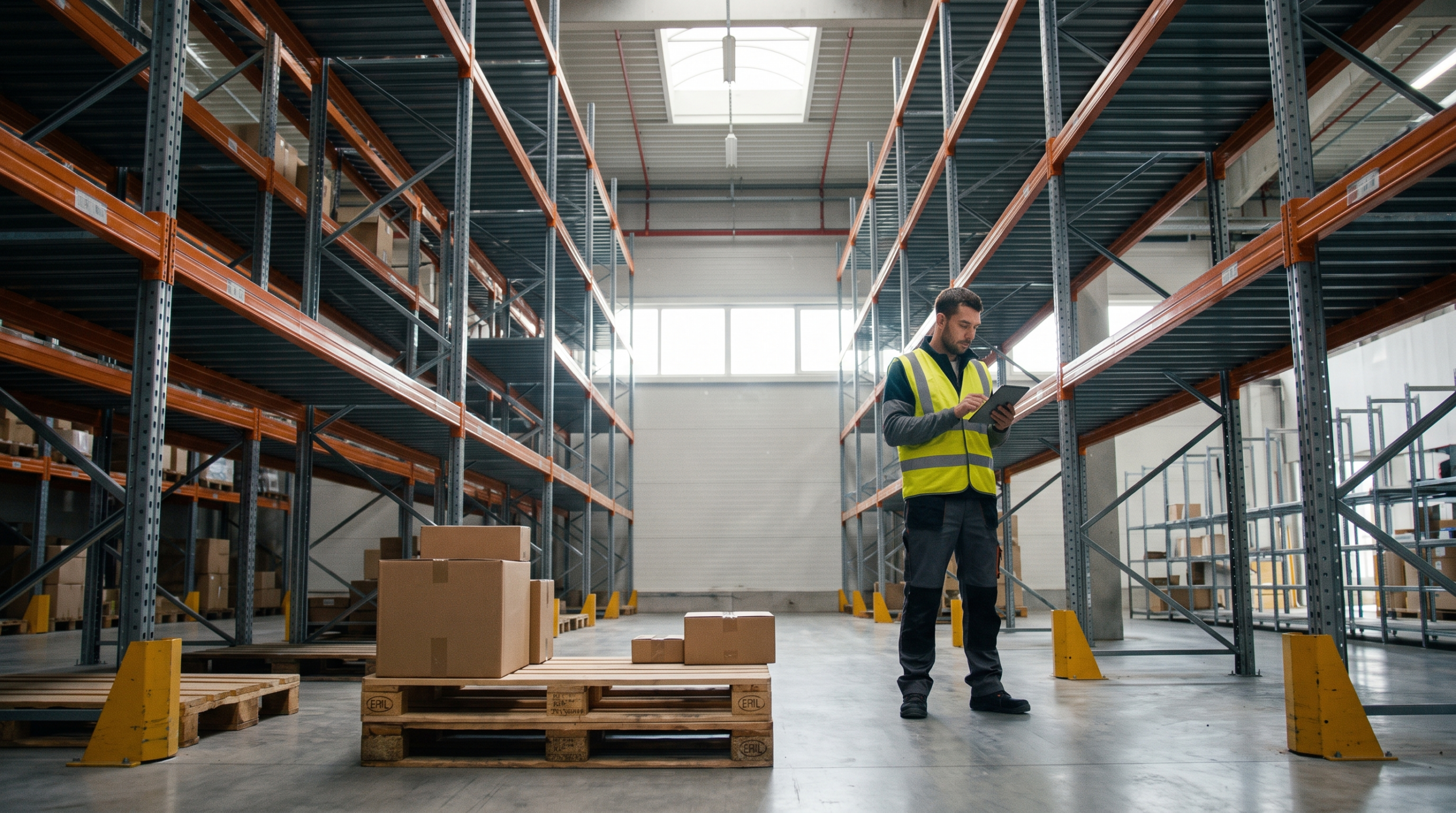
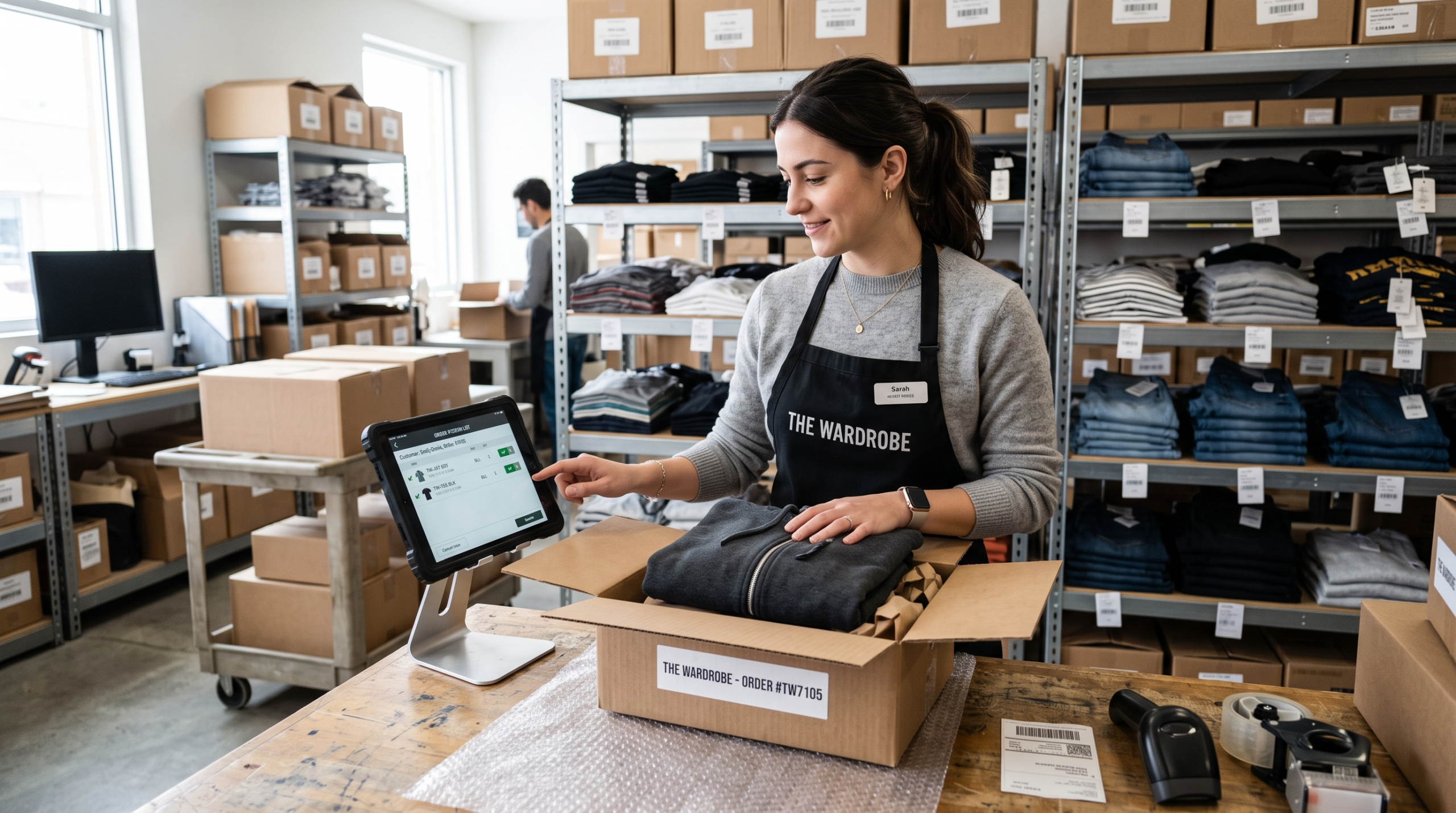
Ship from store stopped being an experiment somewhere around late 2025. In a tracked set of retailers, 11% were fulfilling online orders from stores in 2024. By 2025 that figure was 41%. In 2026 it reached 59% — either actively shipping from stores or with a deployment plan finalized.
The reason is not merchandising strategy. It is parcel math. Store shipments cost roughly 70% of what the same order costs out of a traditional warehouse, and 95% of them land in Zone 1 or Zone 2. When base rates are driven almost entirely by zone, moving the origin closer to the buyer is the only lever that cuts cost and transit time at the same moment.
If you operate physical locations and still fulfill every online order from one node, you are paying a long-zone premium on inventory you already own near the customer.
The zone math behind the 30% saving
A parcel's base rate is a function of billable weight and the number of zones it crosses. Packaging work attacks the weight side. Ship from store attacks the zone side, and the zone side is where the bigger numbers live.
A single central warehouse serving a national customer base ships a predictable spread: a minority of orders land in nearby zones and the rest travel four, five, six or seven zones out. Each zone step adds cost and typically a transit day. A store network inverts that distribution — you are no longer shipping from one point to everywhere, you are shipping from the nearest of many points.
That is why the headline figure is a cost ratio rather than a discount. Nothing about the rate card changed. The origin did.
| Dimension | Single warehouse | Ship from store |
| Typical zone landed | Spread across Zones 2-7 | 95% in Zone 1-2 |
| Relative cost per shipment | 100% (baseline) | About 70% |
| Transit days | 2-5 ground | 1-2 ground, same day possible |
| Inventory held for online | Dedicated ecommerce pool | Shared with retail floor |
| Pick labor | Optimized, low cost per unit | Store associate, higher cost per unit |
| Capacity ceiling | High, predictable | Limited by store staffing |
The honest trade is visible in the bottom three rows. You buy zone compression and pay for it in labor efficiency and capacity. The reason the net math still works is that transportation is usually the larger line item.
How much volume should you expect to move?
Among retailers actively running the model, the share of total online volume fulfilled from stores varies enormously: the top performer routes 85%, the average sits at 37%, the median at 32%, and the weakest at 5%.
This spread is the most useful planning number in this article. A 32% median tells you ship from store is a complement to warehouse fulfillment, not a replacement for it. Build your business case on moving roughly a third of volume, and treat anything above 50% as upside that depends on assortment.
The three factors that set your ceiling
SKU size. Smaller items with low dimensional weight perform best. They fit the packaging a store back room can realistically stock, they are easy for an associate to handle, and they are the parcels where zone reduction represents the largest percentage of total cost. Bulky items are better left to the warehouse or routed to freight.
SKU count. Retailers with enormous online catalogs but thin in-store assortments see low store-fulfillment percentages, for the obvious reason that the item usually is not there. The model rewards brands whose online bestsellers overlap heavily with what sits on the shelf.
Carrier diversity. Retailers that pair store fulfillment with last-mile and same-day specialists — crowdsourced and on-demand courier networks alongside the national carriers — achieve materially higher store-based volume. A store that can only tender to one national carrier's daily pickup is capacity-limited by that pickup.
Peak season: where it helps and where it does not
Be precise about this, because it is where business cases get oversold. Peak demand overloads are assessed per package regardless of zone. Shipping from a store does not avoid them.
| Period | FedEx Ground residential | UPS Ground Residential |
| Pre-peak (late Sept – Nov 21, 2026) | $0.80 | $0.50 |
| Peak (Nov 22 – Dec 26, 2026) | $1.70 | $1.00 |
| Post-peak (Dec 27, 2026 – Jan 16, 2027) | $0.95 | $0.60 |
Those per-package amounts follow the parcel wherever it originates. What store fulfillment does buy you at peak is different and arguably more valuable: it protects your delivery promise. When the national network is congested and transit times stretch, a Zone 1 shipment absorbs delay far better than a Zone 6 one. A one-day lane with two days of slack still arrives before Christmas. A four-day lane with two days of slack does not.
Additional handling and oversize surcharges also climb sharply in the same windows — additional handling in the $7.75 to $13.50 range and oversize from $17.50 to $24.50 depending on period and carrier. That is a packaging and SKU-selection problem, and it is another argument for keeping bulky items out of store fulfillment.
What has to be true operationally
Ship from store fails for operational reasons far more often than economic ones. Four prerequisites, in order of how frequently they break:
- Inventory accuracy at unit level per location. If your store counts are 92% accurate, roughly one in twelve store-routed orders becomes a cancellation or a split. Cancellations cost more than the zone saving they were chasing.
- A safety buffer per SKU per store. Never expose the last units on the shelf to online orders. Reserve a floor quantity so walk-in customers are not disappointed by an order placed three states away.
- Carrier pickup or scheduled drop at every participating store. A parcel packed at 2 pm that sits until tomorrow's pickup has given back its transit advantage.
- Packaging and label hardware in the back room. Associates need right-sized cartons, void fill, a scale and a thermal printer. Improvised packaging produces dimensional weight charges and damage claims that quietly erase the saving.
Returns and split shipments
Two second-order effects deserve planning before launch rather than after.
Returns get better, not worse — a store-fulfilled order can be returned to any store, which converts a reverse parcel into a walk-in and creates a cross-sell opportunity. Make sure your returns system can accept a unit back into the location that does not ship it.
Split shipments get worse. An order with three items where only two sit in the nearest store either splits into two parcels or waits for a single warehouse pick. Splitting doubles the per-parcel fees, including surcharges and minimum charges. Set an explicit rule: split only when the zone saving on the store-held portion exceeds the cost of a second parcel, otherwise ship whole from the warehouse.
A 90-day rollout that does not break anything
- Days 1-15. Pick 10 to 20 stores with the best inventory accuracy and the strongest overlap between online bestsellers and shelf assortment.
- Days 16-30. Restrict scope to 50 to 100 small, low-DIM SKUs. Set per-SKU safety buffers. Install scale, printer and packaging.
- Days 31-60. Route only orders where the store is at least two zones closer than the warehouse. Track cancellation rate, cost per parcel, transit days and associate minutes per order.
- Days 61-90. Compare actual cost per parcel against your warehouse baseline. Expand SKUs before expanding stores — assortment depth drives the volume ceiling more than store count does.
Measure cancellation rate weekly. It is the metric that tells you whether the model is working, and it is the one that degrades silently as you add SKUs.
Surcharge amounts and cost ratios cited here are indicative and vary by carrier agreement, service level, volume and period. Verify against your own rate card and invoices.
The bottom line
Ship from store is now majority practice among tracked retailers because it is the cheapest form of distributed inventory available to anyone who already pays rent on retail square footage. You are not building new nodes. You are activating the ones you have.
Expect to move roughly a third of your volume, expect about 70% of warehouse cost on what moves, and expect your ceiling to be set by assortment overlap and inventory accuracy rather than by ambition.
Running this well means picking the right origin and the right carrier for every single order, at the moment it is placed. That is exactly what HereWeShip is built for: multi-carrier rate shopping and fulfillment routing across your nodes, so each parcel leaves from the point that costs least and arrives soonest. Get a shipping cost review and find out how much of your volume is traveling further than it needs to.