Italy is one of the largest ecommerce markets in the European Union, and one of the easiest places for a US seller to lose money on fulfillment. The products sell. The problem is what happens between the US carrier handoff and the buyer's doorstep in Milan — a customs process that changed materially in July 2026.
If your approach to shipping to Italy from the US is still «mark it under €150 and let it clear,» that approach stopped working this year. The duty exemption that made low-value parcels simple is gone, and the replacement rules put new decisions in front of you about who pays, who declares, and how your checkout shows it.
Here is the current picture: what changed, what Italian buyers actually pay, which carriers make sense at which price points, and the documentation that keeps parcels moving.
What changed on 1 July 2026
The EU abolished the €150 customs duty exemption for low-value consignments as of 1 July 2026. Three consequences matter for sellers:
- Duty now applies below €150. During the transition, B2C parcels valued at €150 or less carry a flat €3 duty rather than a tariff calculated on value.
- The €3 is charged per tariff line, not per parcel. This is the detail most sellers miss. If one order contains items that classify under two different HS subheadings, the parcel owes €6. A silk blouse and two wool blouses fall under different subheadings — two lines, two charges. Multiple units of the same product share one line and one €3 charge.
- Above €150, nothing changed. Consignments over that value remain subject to the ordinary Common Customs Tariff, calculated on classification, origin and customs value.
The flat €3 is explicitly a bridge measure. When the EU Customs Data Hub comes online, expected around 2028, low-value B2C shipments are anticipated to return to proper tariff-based calculation through digitalized processes. Who remits the duty during the transition — seller, marketplace or importer of record — has not been fully settled, and designating platforms as «deemed importers» remains a live possibility. Our broader breakdown of the EU de minimis removal tracks that question.
IVA at 22 percent is the bigger number
Duty gets the headlines; Italian VAT is what actually moves your landed cost. Italy's standard IVA rate is 22 percent, among the higher rates in the EU, and it applies to essentially all commercial goods regardless of value. The old exemption for parcels under €22 no longer applies. Books benefit from a reduced rate of 5 percent.
IVA is assessed on the customs value plus duty plus shipping — so the tax base includes what the buyer paid you to ship the order, not just the product price.
Three ways to handle it
| Model | How VAT is collected | Buyer experience | Best for |
|---|---|---|---|
| IOSS registered | You charge 22% at checkout and remit it in a single monthly EU return | Nothing owed on delivery; cleanest experience | Regular EU volume, orders up to €150 |
| DDP via carrier | Carrier pays duty and IVA at import and bills you | Nothing owed on delivery, but carrier disbursement fees apply | High-value orders, sellers without IOSS |
| DDU / DAP | Buyer pays IVA, duty and the carrier's clearance fee to receive the parcel | Surprise bill at the door; drive refusals and chargebacks | Rarely the right answer for B2C |
IOSS remains the strongest option for consignments up to €150 and is worth the registration overhead at even modest EU volume. See our guide to IOSS registration for the mechanics. Note that IOSS covers VAT, not the new €3 duty — you still need to plan for that line.
Carrier clearance and handling fees in Italy
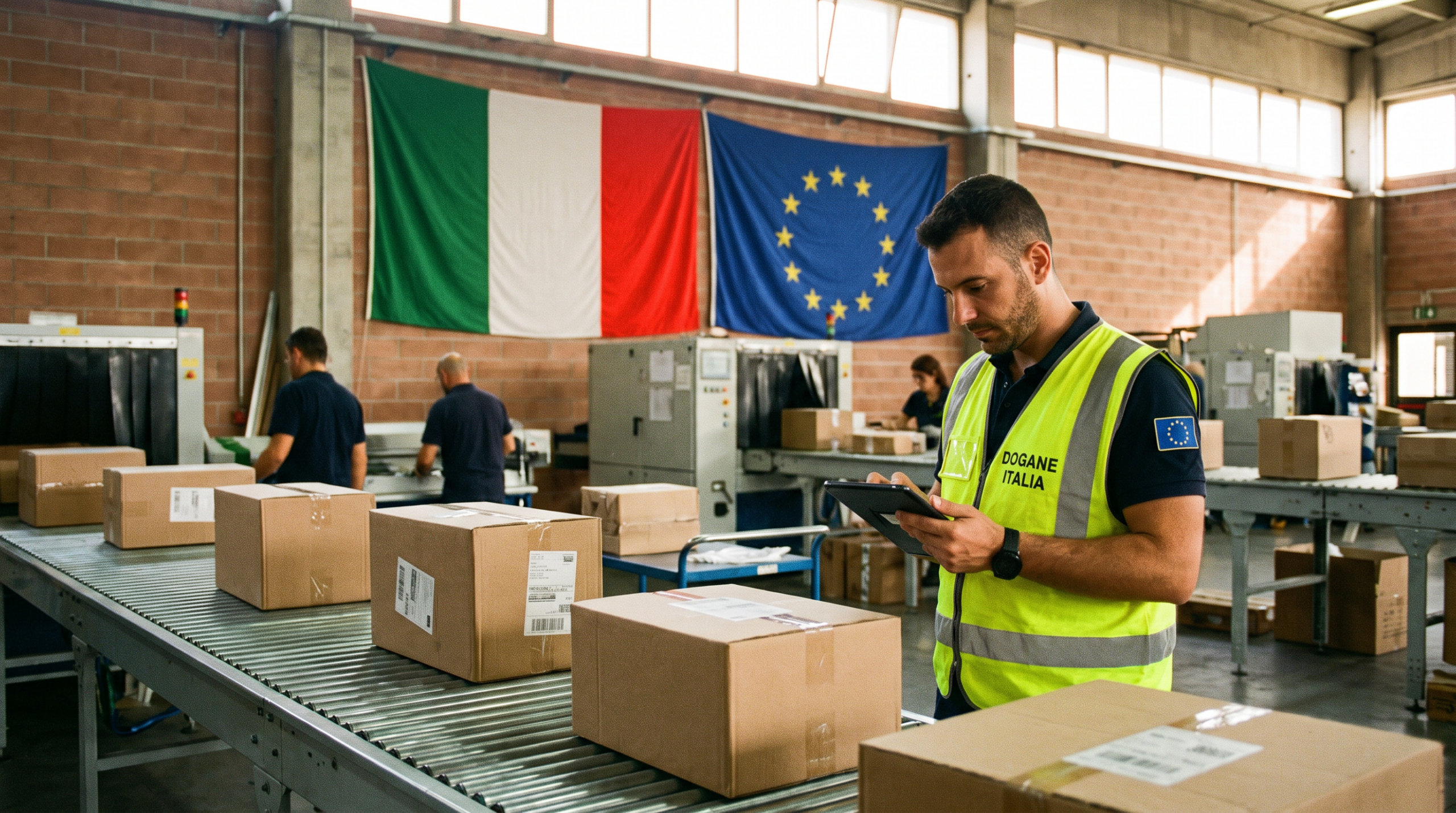
Every parcel entering Italy now requires a full declaration, which means every parcel carries a clearance charge. Carrier handling fees on consumer parcels typically run about $5 to $20 per shipment, charged in addition to duty and IVA. On a €35 order, a €15 fee is a 40 percent cost increase that no one budgeted for — which is exactly why DDU delivery produces refusals. Our breakdown of the EU customs handling fee covers how each carrier structures it.
Typical duty rates above €150, by category
| Product category | Indicative duty rate |
|---|---|
| Clothing and apparel | 8% to 12% |
| Athletic footwear | About 12% |
| Bags and accessories | 5% to 12% |
| Beauty and personal care | 6% to 7% |
| Consumer electronics | 0% to 8% for most devices; higher for some finished goods |
| Books and e-readers | Low to zero duty; books at 5% IVA |
| General consumer goods | Most fall in 5% to 12%; full range 0% to 20% |
These are indicative ranges only. The rate that applies depends on the exact HS classification, the country of origin of the goods, and any applicable trade preference — not on the category label you would use in your own catalog.
Carrier options and transit times
| Local Convenience | Transit time | Indicative cost per lb | Fit |
|---|---|---|---|
| Economy consolidators (eg Asendia) | 8 to 20 business days | ~$18 | Low-value, non-urgent orders |
| Economy forwarding services | 6 to 11 business days | ~$20 to $24 | Price-sensitive buyers who accept slower delivery |
| USPS Priority Mail International | 4 to 10 business days | ~$39 | Lightweight parcels, simple label flow |
| UPS Worldwide Expedited | 4 to 8 business days | ~$36 to $39 | Balanced speed and tracking |
| FedEx International Economy | 3 to 5 business days | ~$40 to $48 | Faster commitments with full clearance support |
| DHL Express Worldwide | 1 to 3 business days | ~$37 to $39 | Best-in-class EU clearance; strongest for high-value orders |
Two planning notes. First, DHL Express is frequently the best value into Italy despite being the fastest service, because its European clearance network is dense and its per-pound pricing competes with slower options. Second, Italian last-mile delivery outside major metros can add days beyond the quoted transit, and southern regions and the islands run longer than the Milan–Rome corridor.
Documentation that keeps parcels moving
- Commercial invoice with an accurate, specific goods description. «Gift,» «sample» and «clothing» are the three fastest ways to get a parcel held.
- Correct HS codes at six digits minimum. Under the new rules, classification determines how many €3 lines your parcel owes, so sloppy codes now cost real money. See our guide on HS codes for ecommerce.
- Accurate declared value. Under-declaring to dodge IVA is a customs offense, not a tactic, and Italian customs actively compares declared values against marketplace listings.
- EORI number for commercial B2B consignments and for sellers acting as importer of record. B2C parcels shipped DDP through a carrier generally use the carrier's arrangements instead.
- IOSS number transmitted in the electronic data, not just printed on documents — otherwise VAT gets charged again at the border.
- Tax Code of the recipient is increasingly requested by Italian carriers for clearance on consumer deliveries. Collecting it at checkout prevents delays.
Restricted and prohibited items
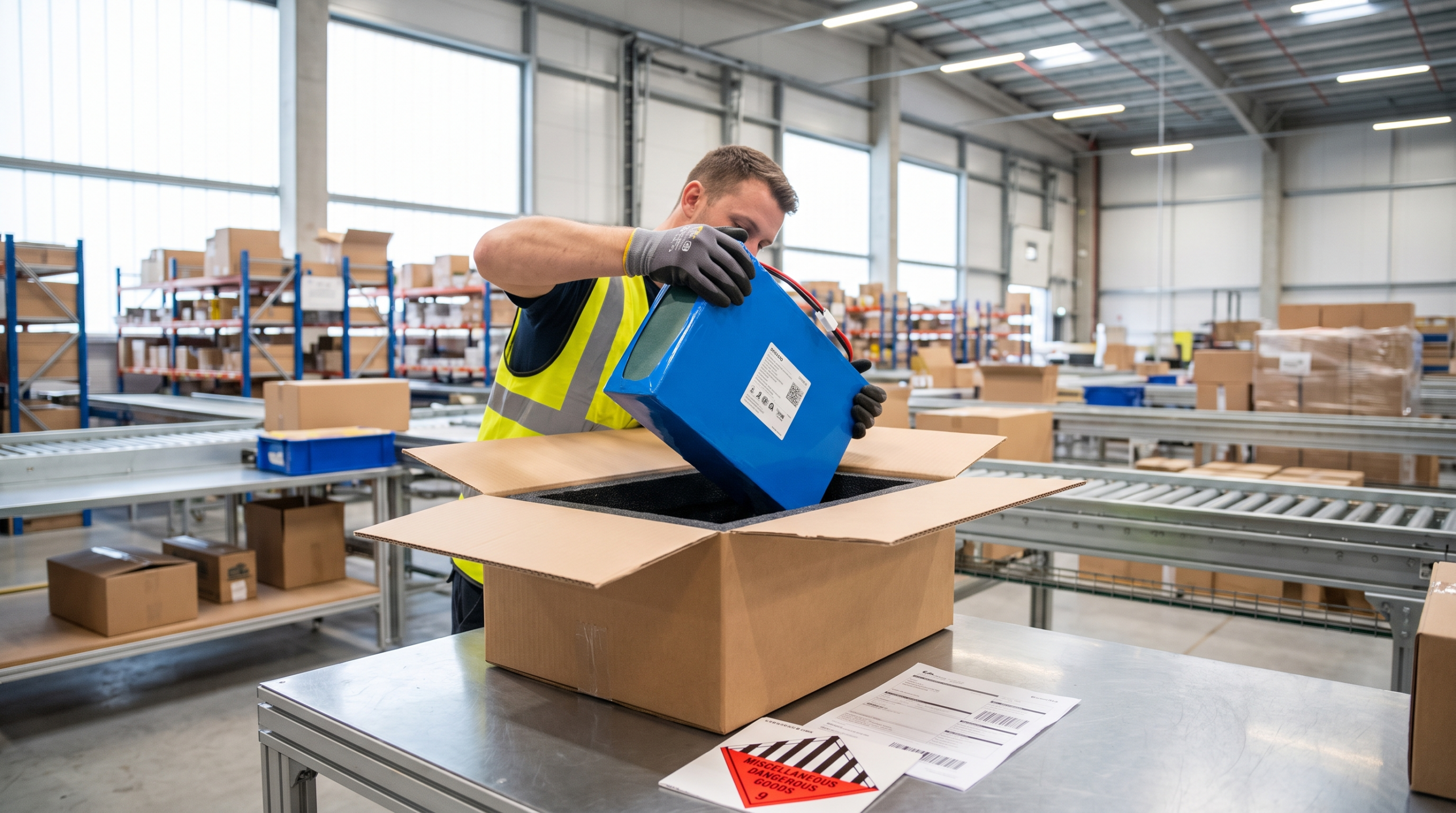
Strictly prohibited: firearms, ammunition and explosives, illegal narcotics, counterfeit goods, certain hazardous materials. Commonly restricted and often requiring permits or certificates: meat, dairy and fresh or frozen foods; plants, seeds and soil (phytosanitary certificates); prescription medications; some cosmetics and perfumes; tobacco; alcohol above set limits; animal products and furs; cultural artifacts. Lithium-battery goods such as hoverboards and e-mobility devices face carrier-specific restrictions on top of customs rules — see our guide to shipping lithium batteries.
Set up checkout so Italy converts
The sellers who succeed in Italy are not the ones with the cheapest freight — they are the ones whose buyers know the total before they click. Three changes do most of the work:
- Show landed cost at checkout. Product price, shipping, 22% IVA and duty in one number. Our guide to showing duties at checkout covers implementation.
- Ship DDP or IOSS, never DDU. A surprise €15 clearance fee at the door generates refusals, return freight and a lost customer.
- Publish realistic delivery dates. Italian buyers tolerate a 7-day window they were promised far better than a 3-day window that slips to 9.
Consider whether an EU stock position earns its keep. Once you are shipping steady volume into Italy, holding inventory in an EU fulfillment center converts every order from a cross-border import into a domestic delivery — no per-parcel clearance, no €3 lines, and 1 to 2 day transit.
Want help structuring the Italy lane — career mix, DDP setup, IOSS and HS classification? HereWeShip with online sellers works to build cross-border shipping programs that hold margin at the landed-cost level. Talk to our team before you scale your EU volume.
All duty rates, tax rates, fees and transit times in this article are indicative 2026 figures provided for planning purposes. Actual charges depend on HS classification, country of origin, declared value, the service selected and your negotiated carrier agreement, and rules can change without notice. Verify current requirements with the Italian Customs and Monopolies Agency (ADM) and your carrier before shipping.