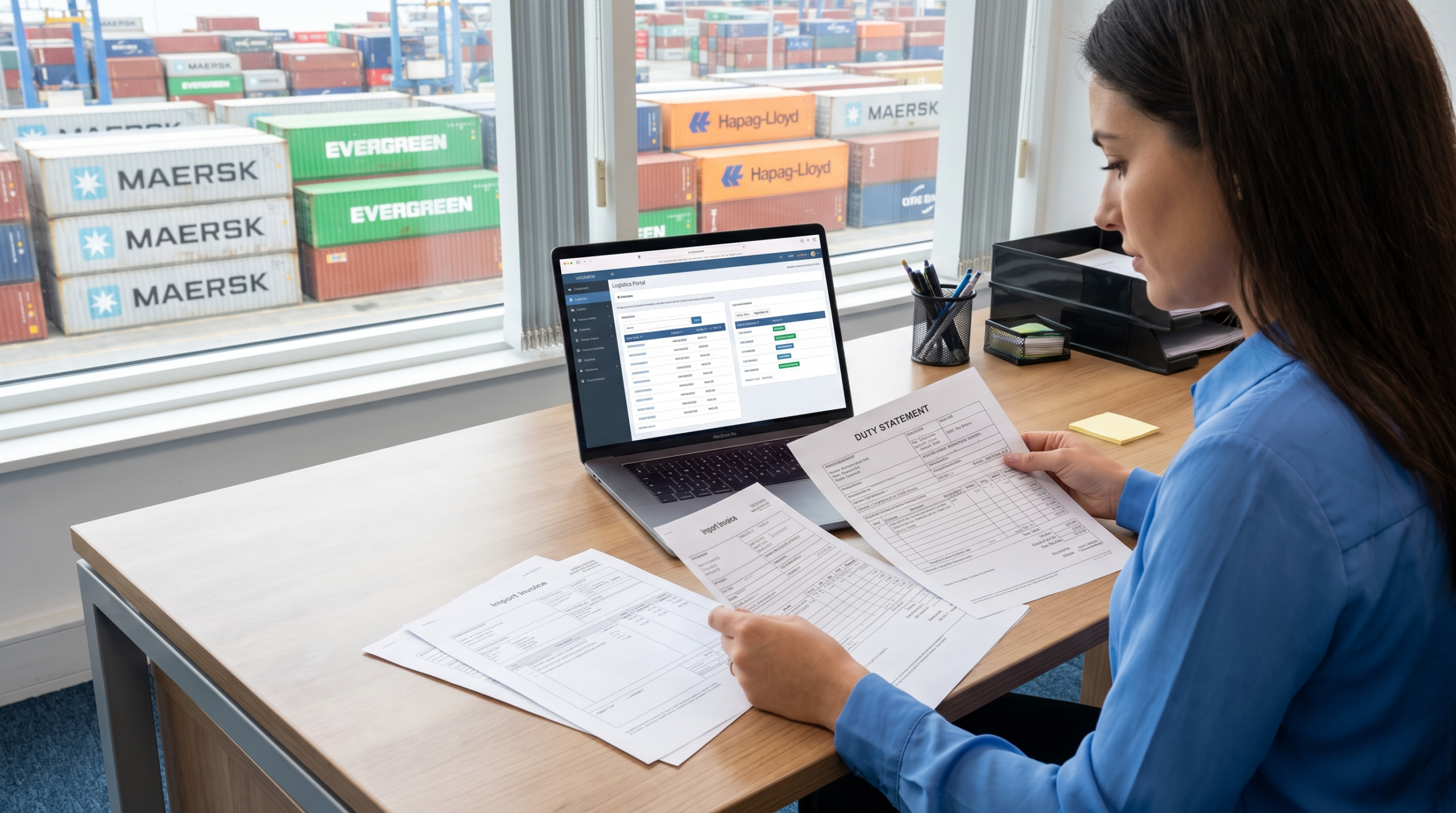
For years, most small ecommerce stores could ignore the question entirely. Low-value parcels slipped under de minimis thresholds, duty rarely applied, and the difference between DDP and DAP was an academic distinction that mattered to freight forwarders and nobody else.
That era is over. The United States removed its $800 de minimis exemption for all countries in August 2025. The European Union moved to apply a flat customs charge on low-value consignments. The United Kingdom is revisiting its own threshold. The practical result is the same everywhere: duty now attaches to parcels that used to travel free.
Which means DDP vs DAP is no longer a paperwork preference. It is a pricing decision that shows up directly in your margin, your refusal rate and your support queue.
What the two terms actually commit you to
DAP (Delivered At Place) — sometimes still called DDU — means you deliver the goods to the destination, but import duties and taxes are the buyer’s responsibility. The carrier contacts the recipient, collects the charges plus a handling fee, and only then releases the parcel.
DDP (Entrega con derechos pagados) means you, the seller, are responsible for everything through to the buyer’s door: freight, duties, import taxes and clearance fees. The customer pays one number at checkout and never hears from customs.
The obvious reading is that DAP is cheaper because someone else pays the duty. That reading is usually wrong once you count what happens after the parcel lands.
The real cost comparison
| Cost factor | DAP | DDP |
|---|---|---|
| Duties and import tax | Paid by customer | Paid by you (collected at checkout) |
| Carrier clearance / disbursement fee | Charged to customer, often $10–$20 | Charged to you, typically lower on volume accounts |
| Checkout price shown | Lower | Higher |
| Parcel refusal risk | Elevated | Low |
| Return freight on refusal | Your cost | Rarely triggered |
| Support tickets per order | Higher | Lower |
| Setup complexity | Minimal | Requires duty calculation at checkout |
All figures are indicative and vary by destination, carrier, product classification and your negotiated agreement.
Where DAP quietly loses money
A refused DAP parcel is the worst outcome in international ecommerce. You pay outbound freight, return freight, and often a storage or abandonment fee — then refund the order. A single refusal can wipe out the margin on several successful orders.
Refusals cluster around a predictable trigger: the customer was not told. Someone buys a $60 item, then receives a message demanding $22 before delivery. Refusal is a rational response to a charge they did not agree to.
When DAP is still the right call
DDP is not universally better. It stops making sense in two situations.
Thin margins on low-value orders. If your average order value sits below roughly $50 and your gross margin is under 20%, absorbing duty can eat the entire profit on the order. Passing it through — clearly disclosed — is the sounder choice.
Long-tail destinations. Calculating accurate duty for a market you ship to twice a year is rarely worth the engineering. Run DDP on your top five or six destinations and DAP elsewhere.
Making DDP work without giving away margin
Classify your catalogue properly
Everything depends on HS codes. A wrong code either overcharges your customer or leaves you short when the real bill arrives. Classify at the six-digit level minimum, and go to the destination country’s full code for your top sellers. This is a one-time job that pays out on every order afterward.
Quote duty at checkout, don’t guess
Blanket percentages fail in both directions. A landed-cost calculation that reads HS code, destination and order value gives you a number you can actually stand behind. If you have not set this up yet, start with our guide to showing duties at checkout. Where a tolerance is unavoidable, a small buffer costs less than systematically under-collecting.
Use trade agreements you already qualify for
Preferential rates under agreements like USMCA, CETA or the UK–EU arrangement are never applied automatically. They require an origin declaration on the commercial invoice. Stores that skip this line pay full tariff on goods that qualify for zero — one of the most common and most expensive documentation misses in cross-border ecommerce.
Make the promise visible
If you have absorbed duty, say so. « All duties and taxes included — no charges on delivery » near the checkout button converts. The conversion lift from DDP comes from removing uncertainty, and uncertainty is only removed if the customer reads the message.
A practical decision rule
- AOV above $150, margin above 30%: DDP almost always wins.
- AOV $50–$150: DDP on your top destinations, DAP elsewhere.
- AOV under $50, thin margin: DAP with prominent, unambiguous disclosure.
- Any destination where duty exceeds 15% of order value: model both before committing.
En resumen
The end of de minimis did not just add a cost line — it removed the option of not deciding. Duty applies now, so someone is going to pay it. Your only real choice is whether that conversation happens at checkout, where you control it, or at the door, where you do not.
For most stores selling above $100 an order, DDP is the cheaper option once refusals, return freight and support time are counted honestly. The stores that struggle with it are usually the ones that implemented it without fixing their HS codes first.
Shipping internationally and unsure which model fits your catalogue? Aquí estamos works with ecommerce sellers to structure cross-border shipping so duties, documentation and delivery expectations all line up.