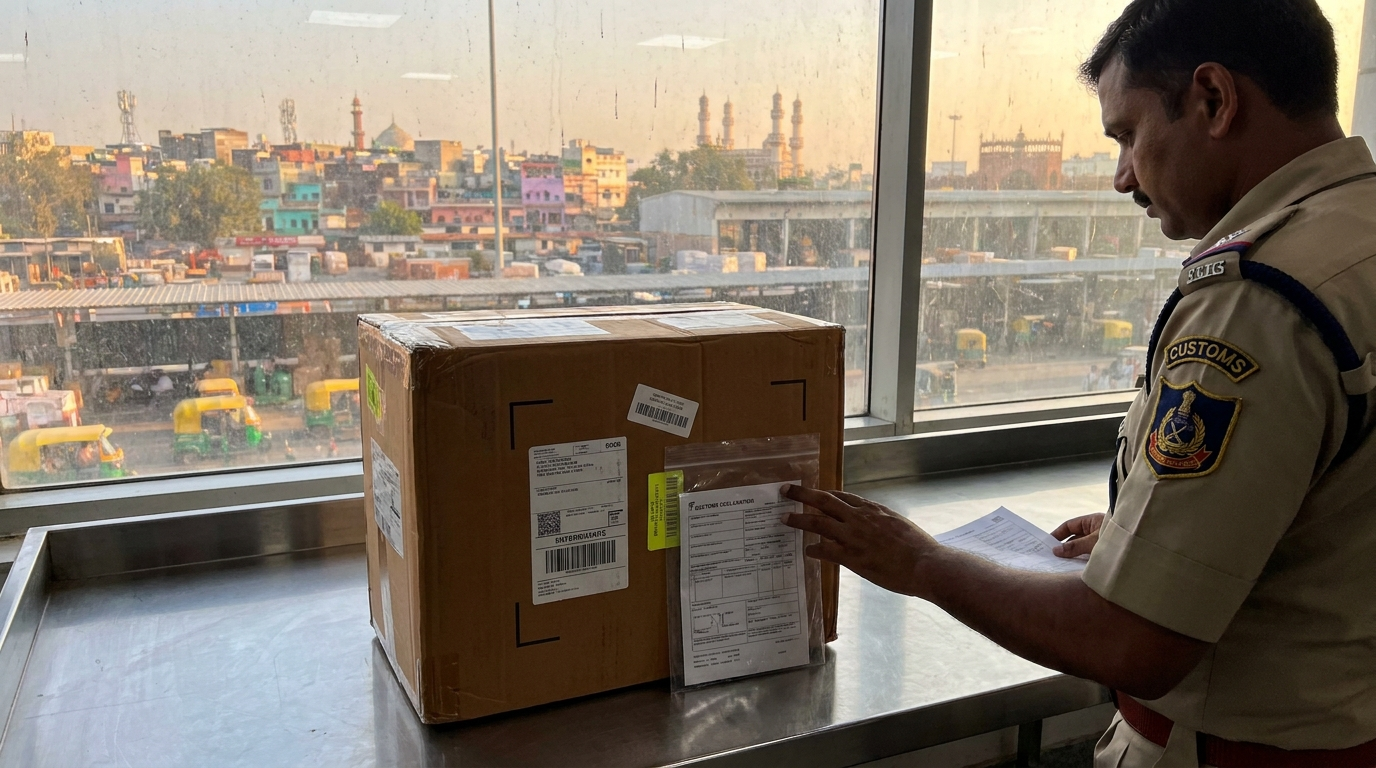

On July 12, 2026, USPS quietly changed the single number that decides what most ecommerce sellers pay to ship a box. The USPS DIM weight divisor dropped from 166 to 139 — and at the same time, every fractional package dimension now rounds up to the next whole inch.
Neither change touched the published rate card. That is exactly why so many sellers missed it. Your per-pound price looks the same; the pounds you get billed for went up. For anyone shipping light, bulky products, the effect is a quiet 15–20% increase on a large share of the parcel mix.
Here is what actually changed, the arithmetic behind it, and the levers that still work.
What Is Dimensional Weight, and Why the Divisor Matters
Carriers do not sell weight. They sell space on a truck or a plane. A box of pillows weighing 4 lbs occupies the same trailer volume as a box of hardware weighing 40 lbs, so carriers invented dimensional weight to charge for the space instead of the scale reading.
The formula is simple:
DIM weight = (Length × Width × Height) ÷ divisor
You are billed on whichever is higher: actual weight or DIM weight. That figure is your billable weight.
The divisor is the whole ballgame. A bigger divisor produces a smaller DIM weight and a cheaper shipment. USPS had been sitting at 166 while UPS and FedEx used 139 for standard domestic commercial parcels. That 27-point gap was one of the quiet reasons USPS won so much lightweight, bulky ecommerce volume.
That advantage is now gone.
The Two Changes That Took Effect July 12, 2026
1. The divisor moved from 166 to 139
This applies to Priority Mail Express, Priority Mail, USPS Ground Advantage, and Parcel Select. Because 166 ÷ 139 ≈ 1.194, every dim-rated package gained roughly 19% more billable weight overnight.
2. Every dimension rounds up to the next whole inch
Previously a 17.5-inch side could be measured as 17.5. Now it is 18. Applied to all three dimensions, this compounds fast. A box measuring 17.5 × 13.25 × 11.5 in. is 2,667 cubic inches on the tape measure. Rounded up to 18 × 14 × 12, it becomes 3,024 cubic inches — a 13% volume increase before the divisor change is even applied.
The threshold that still protects you
USPS applies DIM pricing only to packages exceeding 1,728 cubic inches (one cubic foot). Anything at or under that ships on actual weight. This single threshold is now the most valuable line in USPS pricing, and we will come back to it.
The Real Cost: Before and After
The table below shows billable DIM weight for common ecommerce box sizes under the old and new divisors. Figures are rounded and illustrative; your actual cost depends on your service, zone and negotiated agreement.
| Box size (in.) | Cubic inches | DIM @ 166 | DIM @ 139 | Added lbs |
|---|---|---|---|---|
| 14 × 14 × 12 | 2,352 | 14.2 lbs | 16.9 lbs | +2.7 |
| 18 × 14 × 12 | 3,024 | 18.2 lbs | 21.8 lbs | +3.6 |
| 20 × 16 × 12 | 3,840 | 23.1 lbs | 27.6 lbs | +4.5 |
| 24 × 18 × 12 | 5,184 | 31.2 lbs | 37.3 lbs | +6.1 |
A seller moving 500 of those 20 × 16 × 12 boxes a month just added roughly 2,250 billable pounds to the monthly invoice for shipping the exact same products.
Who Gets Hit Hardest
Density is destiny here. If your product weighs less than about 8 lbs per cubic foot, DIM weight sets your price and this change lands squarely on you. The most exposed categories:
- Home and decor — lamps, throw pillows, cushions, artificial plants, wall art
- Pet supplies — beds, crates, scratching posts
- Baby and juvenile — strollers, ride-on toys, play mats
- Apparel and soft goods in boxes — jackets, bedding, comforters
- Sporting goods — helmets, yoga bolsters, protective gear
- Flat-pack furniture parts and lightweight assemblies
If your products are dense — books, tools, supplements, small electronics — actual weight still governs and you will barely notice.
Six Ways to Protect Your Margin
1. Audit your SKUs against 1,728 cubic inches
Export your catalog with packed dimensions, round every dimension up to the next inch, and multiply. Sort by cubic inches. Anything above 1,728 is now dim-rated at USPS. This one spreadsheet tells you the size of your exposure in an afternoon.
2. Chase the cubic-foot threshold, not just the box
Dropping a box from 1,850 to 1,700 cubic inches removes DIM pricing entirely for USPS — a far bigger win than shaving a pound. A 12 × 12 × 11 box sits at 1,584 cubic inches and stays on actual weight. Redesigning a single high-volume carton to fit under a cubic foot often pays for itself in a month.
3. Right-size everything else
With round-up in force, the half-inch of slack you used to ignore now costs real money. Reducing a carton from 18 × 14 × 12 to 16 × 12 × 10 cuts cubic inches from 3,024 to 1,920 — a 36% reduction in dim weight. Our guide to ecommerce packaging in 2026 covers the right-sizing playbook in detail.
4. Swap rigid boxes for mailers where you safely can
Poly mailers and padded envelopes compress in transit and frequently keep soft goods under the DIM threshold entirely. Apparel sellers routinely cut billable weight in half with this move alone.
5. Rate-shop every parcel again
The old rule of thumb — “USPS is the cheap one for bulky items” — was built on the 166 divisor. With all three major carriers at 139, the winner now changes by weight band, zone and service. A multi-carrier shipping strategy is no longer optional for dim-heavy catalogs.
6. Know when to leave parcel entirely
Once billable weight climbs past roughly 50 lbs, or dimensions trigger oversize handling, palletized freight often wins. See our breakdown of shipping oversized items for the crossover math.
What This Signals About 2027
The divisor alignment is not an isolated event. It is USPS closing the last structural discount it offered against UPS and FedEx, and it follows a broader industry pattern of tightening cubic-volume rules and DIM rounding rather than raising headline rates. Expect the pressure to keep moving toward volume-based pricing, which means packaging engineering is now a margin discipline, not a warehouse afterthought.
The sellers who came through July 2026 in good shape were not the ones with the best rates. They were the ones who already knew their cubic inches.
Get Ahead of Your Dim Weight
Every rate figure above is indicative and will vary by service level, zone, and your specific carrier agreement — always confirm against your own contract before rebuilding your pricing.
If you would rather not run the audit alone, Aquí estamos helps ecommerce sellers compare live rates across carriers, spot the SKUs where dimensional weight is eating your margin, and ship at negotiated pricing without volume minimums. Start comparing rates on HereWeShip and find out what the 139 divisor is really costing you.