From January 18, 2027, FedEx charges a $25 paper trade document fee per shipment when trade documents are submitted on paper instead of electronically, plus a $5 manual airbill fee on US domestic and export shipments started with a paper airbill. UPS moves first: from January 4, 2027 it applies shipping document charges of $5.00 per package on air services and $10.00 per package on Ground and 3 Day Select. If your fulfillment desk still prints commercial invoices and sticks them in a pouch, that habit now has a published price tag.
Here is exactly what is being charged, why carriers introduced it this cycle, and what it costs a seller who does nothing.
What is the paper trade document fee?
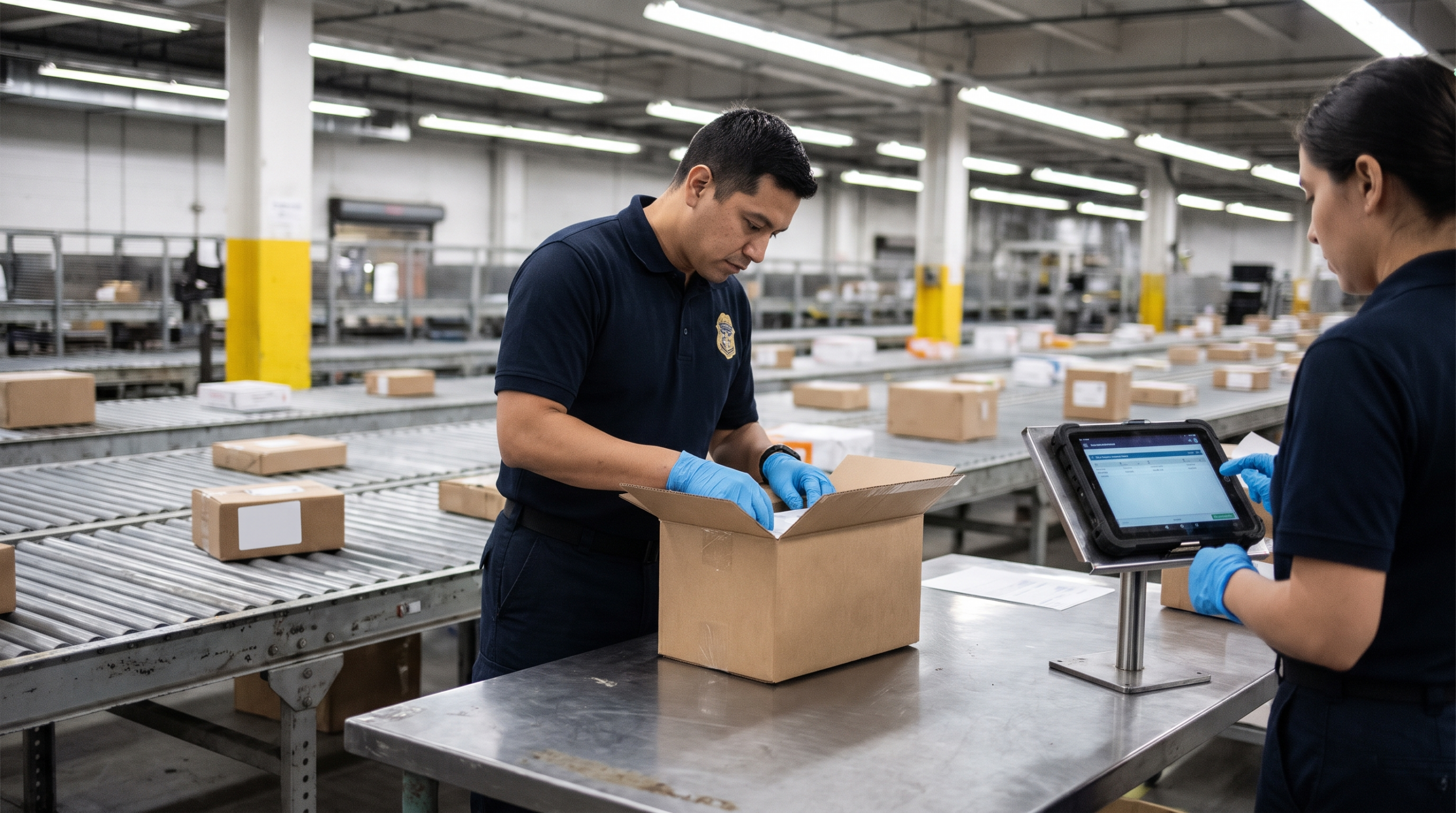
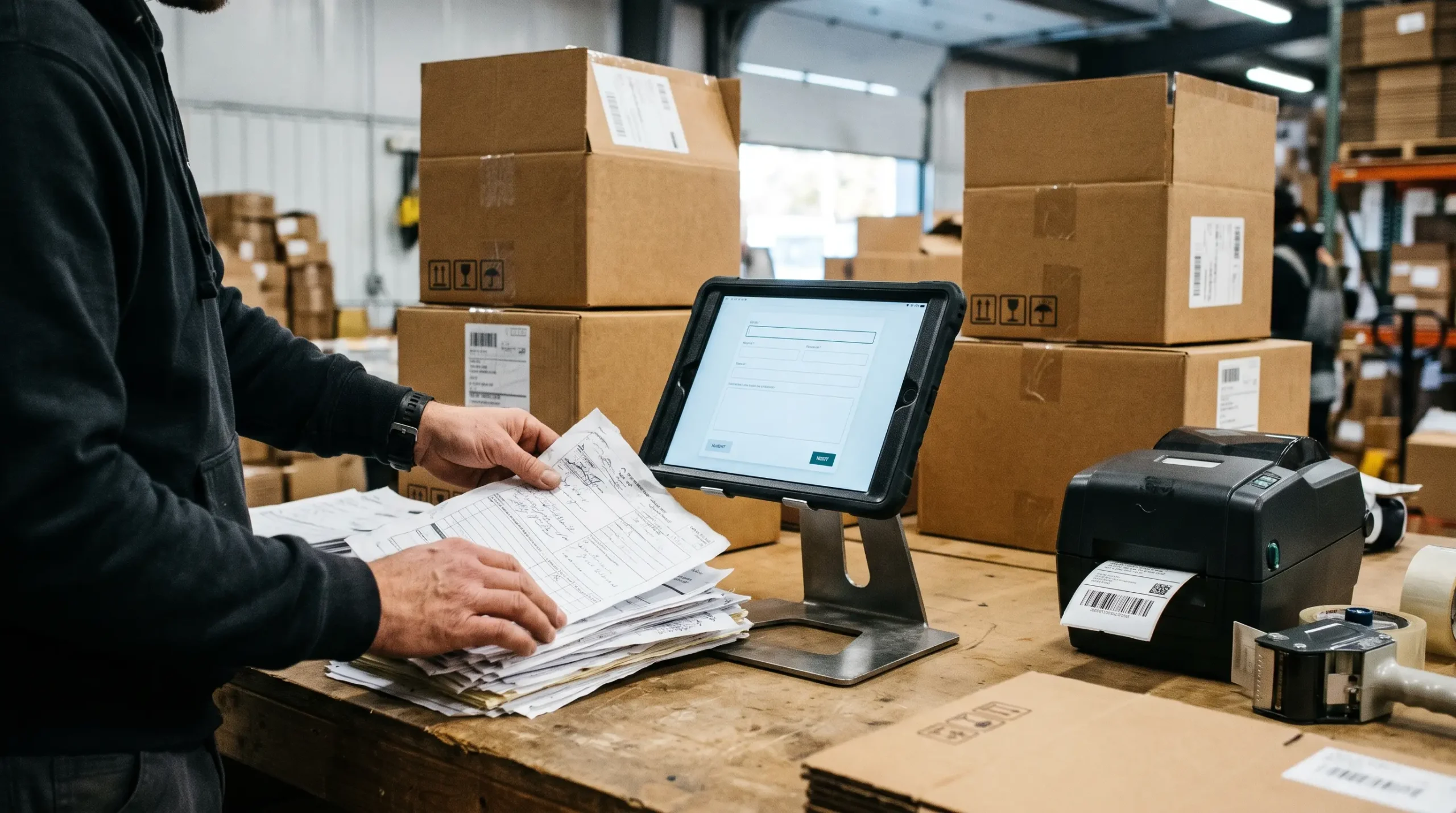
It is a per-shipment or per-package charge for handing the carrier paper where an electronic file was possible. Trade documents are the customs paperwork that travels with an international parcel: the commercial invoice, the certificate of origin, packing lists, licences and permits. Electronic Trade Documents (ETD) upload that data through the carrier’s API or shipping platform; the paper route forces a human to scan, key or route the document at a hub.
The manual airbill fee is separate and narrower. It applies when the shipping label itself originates from a paper waybill book rather than from a shipping system, and it covers US domestic and export shipments.
| Charge | Carrier | Amount | Basis | Effective |
|---|---|---|---|---|
| Paper trade document fee | FedEx | $25.00 | Per shipment | January 18, 2027 |
| Manual airbill fee | FedEx | $5.00 | Per shipment (US domestic and export) | January 18, 2027 |
| Air shipping documents | UPS | $5.00 | Per package | January 4, 2027 |
| Ground and 3 Day Select shipping documents | UPS | $10.00 | Per package | January 4, 2027 |
Note the basis difference, because it decides who gets hurt. FedEx charges per shipment, so a ten-carton export order with one paper invoice attracts one $25 fee. UPS charges per package, so the same ten cartons on Ground would attract $100. Multi-piece shippers should model UPS exposure first.
Why are carriers pricing paper now?
Because US customs stopped accepting the shortcut that let low-value parcels move on manifest data alone. The de minimis administrative exemption for shipments valued at $800 or less was indefinitely suspended effective June 24, 2026 for merchandise arriving by every mode except the international postal network. Three consequences followed:
- Release from manifest is gone for those shipments. They now require formal or informal entry, with Entry Type 11 as the main informal path.
- The Entry Type 86 Test was suspended, removing the simplified electronic entry many ecommerce brokers had standardised on.
- Every parcel needs real entry data — classification, valuation, country of origin, importer of record — on every shipment, not just the high-value ones.
That shift multiplied the volume of customs data carriers must capture and transmit. Paper is the one input that cannot be automated, and it now sits in the path of a legally required filing. Pricing it is how carriers push the remaining paper volume into electronic channels. At HereWeShip, the sellers we see exposed are rarely the ones shipping the most — they are the ones whose international orders are still handled as exceptions, outside the main shipping platform.
What does it cost a seller who changes nothing?
Take a store shipping 300 international parcels a month, with 40 % still going out with printed trade documents. That is 120 shipments a month.
| Scenario | Monthly | Annual |
|---|---|---|
| 120 FedEx shipments, paper trade documents at $25 | $3,000 | $36,000 |
| Same 120 shipments, each also on a paper airbill at $5 | $3,600 | $43,200 |
| 120 UPS Ground packages, documents at $10 each | $1,200 | $14,400 |
| Same volume, filed electronically | $0 | $0 |
Unlike dimensional weight or residential surcharges, this fee has a clean zero. Nothing about the parcel, the box or the destination changes the outcome — only the format of the file. It is the rare carrier charge that is entirely avoidable by process, which also means a finance team will ask why it appeared at all.
Two other January dates compound it: both FedEx and UPS apply a general rate increase averaging 5.9 % (UPS from December 21, 2026; FedEx from January 4, 2027), FedEx raises the international residential delivery charge from $6.95 to $7.35 and extends it to more destinations on January 18, 2027, and FedEx reclassifies zones for selected ZIP pairs on February 1, 2027. The document fee lands on top of all of it.
Which documents have to go electronic?
In practice, anything that currently leaves your building in a plastic pouch:
- Commercial invoice — the one that matters most, and the one most often printed because a marketplace or ERP generates it as a PDF rather than pushing it to the carrier.
- Certificate of origin — required for preferential treatment claims; print it and the whole shipment is a paper shipment.
- Packing list — low risk on its own, but it rides along with the invoice.
- Licences, permits and partner-government-agency forms — the ones most likely to be handled manually because they come from a third party.
The practical test is not whether you own a scanner. It is whether the document reaches the carrier as structured data attached to the shipment record before pickup. A PDF emailed to a broker is still paper as far as the fee is concerned.
What should sellers do before January 18, 2027?
- Count your paper shipments this week. Pull last month’s international labels and mark every one where a document was printed. That count multiplied by $25 is your exposure, and it is usually higher than anyone on the team expects.
- Turn on Electronic Trade Documents in your shipping platform. It is a setting, not a project, on every major multi-carrier platform. The work is in mapping your invoice fields correctly, not in enabling it.
- Fix the exception path, not the main path. High-volume SKUs are usually already electronic. The fee will come from oversized orders, B2B shipments, replacement parts and anything a human handles by hand.
- Audit your HS codes before the entry data matters more. With formal and informal entry now required, a wrong classification is a clearance delay rather than a rounding error. Our guide to HS codes and customs delays covers the common misclassifications.
- Re-read your broker agreement. If a broker keys your documents manually, confirm who absorbs the carrier fee. Our breakdown of customs brokerage fees shows where these costs usually land.
- Check the rest of the January changes together. The de minimis suspension playbook and the 2027 international residential delivery charge are the two other items that move cross-border cost per parcel this winter.
A fee with a zero option
Most 2027 carrier increases are something you negotiate down. This one you switch off. The deadline is real — January 4, 2027 for UPS document charges and January 18, 2027 for the FedEx $25 paper trade document fee — and the only work required is making sure your customs data leaves your system electronically on every shipment, including the awkward ones.
HereWeShip files trade documents electronically on every cross-border label we generate and flags shipments missing required customs data before they ship. See how your cross-border shipments are set up and find the orders still leaving on paper.
Sources: FedEx 2027 rate and surcharge changes announced for January 4, January 18 and February 1, 2027; UPS 2027 rate changes effective December 21, 2026 and January 4, 2027; US Federal Register, indefinite suspension of the de minimis exemption for merchandise arriving through all modes other than the international postal network, effective June 24, 2026. All amounts are indicative and vary by carrier, service, destination and negotiated agreement; confirm the figures against your own carrier service guide and rate card before making pricing decisions.