The most expensive mile in ecommerce is the last one — and in 2026, a fast-growing share of online orders never touches a doorstep at all. Parcel lockers and pickup/drop-off (PUDO) points, collectively known as out-of-home (OOH) delivery, have moved from a European curiosity to a mainstream option that US sellers can no longer ignore.
The numbers tell the story: more than two billion parcels were delivered to out-of-home locations across Europe in a single year, growing over 20% year on year, and 46% of regular European online shoppers now prefer OOH delivery. US networks — from USPS Smart Lockers to Amazon Hub, UPS Access Point and FedEx locations inside Walgreens and Dollar General — are racing to catch up. Here is why that matters for your store’s margins.
Why home delivery keeps getting more expensive
Delivering one box to one door is brutally inefficient. A driver may make 120 stops a day, each with its own surcharges and failure risks. For a typical US parcel, home delivery stacks up residential surcharges of roughly $6–$7, delivery area surcharges of $5–$17 in outlying ZIP codes, plus the hidden costs of failed deliveries and porch piracy — a problem estimated at $37 billion in stolen packages. Every re-delivery attempt and every « where is my order » ticket eats further into margin.
What lockers and PUDO points change
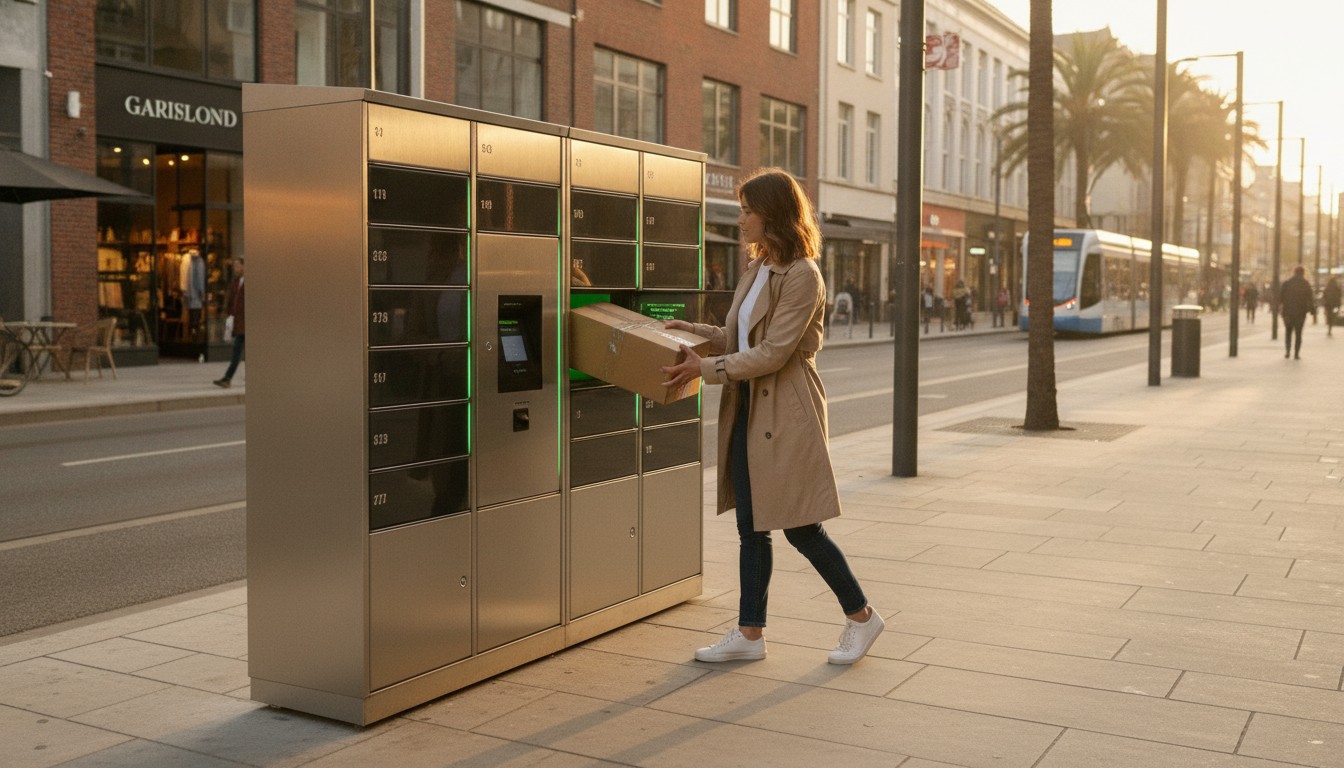
Out-of-home delivery consolidates dozens of packages into one stop. The impact shows up in four places:
- Lower delivery cost: shipping to a locker or PUDO point costs on average up to 25% less than home delivery, before counting avoided surcharges;
- Near-zero failed deliveries: the package waits for the customer, not the other way around — no missed-delivery cards, no second attempts;
- Theft protection: a locked compartment with a pickup code eliminates the doorstep window where most theft happens;
- Fewer support tickets: customers collect on their schedule, cutting WISMO volume and refund claims for « delivered but not received » orders.
The 2026 out-of-home landscape
Indicative snapshot of the networks relevant to US and international sellers:
| Network | Type | Scale / reach |
|---|---|---|
| USPS Smart Lockers | Lockers at Post Offices | Expanding nationwide, free for Ground Advantage & Priority |
| Amazon Hub Lockers | Lockers in retail locations | Thousands of US locations (Amazon orders) |
| UPS Access Point | PUDO in stores (CVS, Michaels…) | 20,000+ points in North America |
| FedEx retail network | PUDO (Walgreens, Dollar General…) | Tens of thousands of US locations |
| Europe (all operators) | Lockers + PUDO | ~646,000 points; 94% of Europeans within 10 min of one |
Europe’s trajectory is the preview: parcel lockers are already the second most preferred delivery option there, and carrier-agnostic « open networks » — one locker serving multiple carriers — are becoming the norm. Expect the same consolidation in North America.
How to add OOH delivery to your store
- Offer it at checkout, priced lower than home delivery. Passing through even half of your OOH savings gives price-sensitive shoppers a cheaper option and lifts conversion — shipping cost remains the #1 driver of cart abandonment;
- Use a multi-carrier platform that exposes locker and PUDO locations natively, with a map picker at checkout;
- Route international orders to OOH networks in Europe, where locker delivery is often meaningfully cheaper than home delivery and preferred by locals;
- Promote it for high-theft ZIP codes: flag locker delivery to customers in apartment buildings and urban areas where porch piracy rates run highest;
- Track redemption: monitor pickup times and abandoned parcels — most networks return uncollected packages after 3–7 days, so reminder messaging matters.
When home delivery still wins
OOH is not a universal answer. Heavy or bulky items, perishables, and premium « white glove » experiences still belong at the doorstep. Rural areas with sparse networks may offer no convenient point at all. The winning setup for 2026 is choice: home delivery, locker and PUDO side by side at checkout, each accurately priced, letting the customer self-select the option that costs you less.
The bottom line
Out-of-home delivery is that rare lever that cuts your costs and improves the customer experience at the same time. Sellers who add lockers and pickup points to checkout in 2026 will ship cheaper, lose fewer packages and convert more carts. HereWeShip helps ecommerce sellers compare carriers, access discounted rates and build smarter delivery options into every order — get your free quote and see how much your last mile really costs.
Figures shown are indicative and vary by carrier, network, agreement and destination.