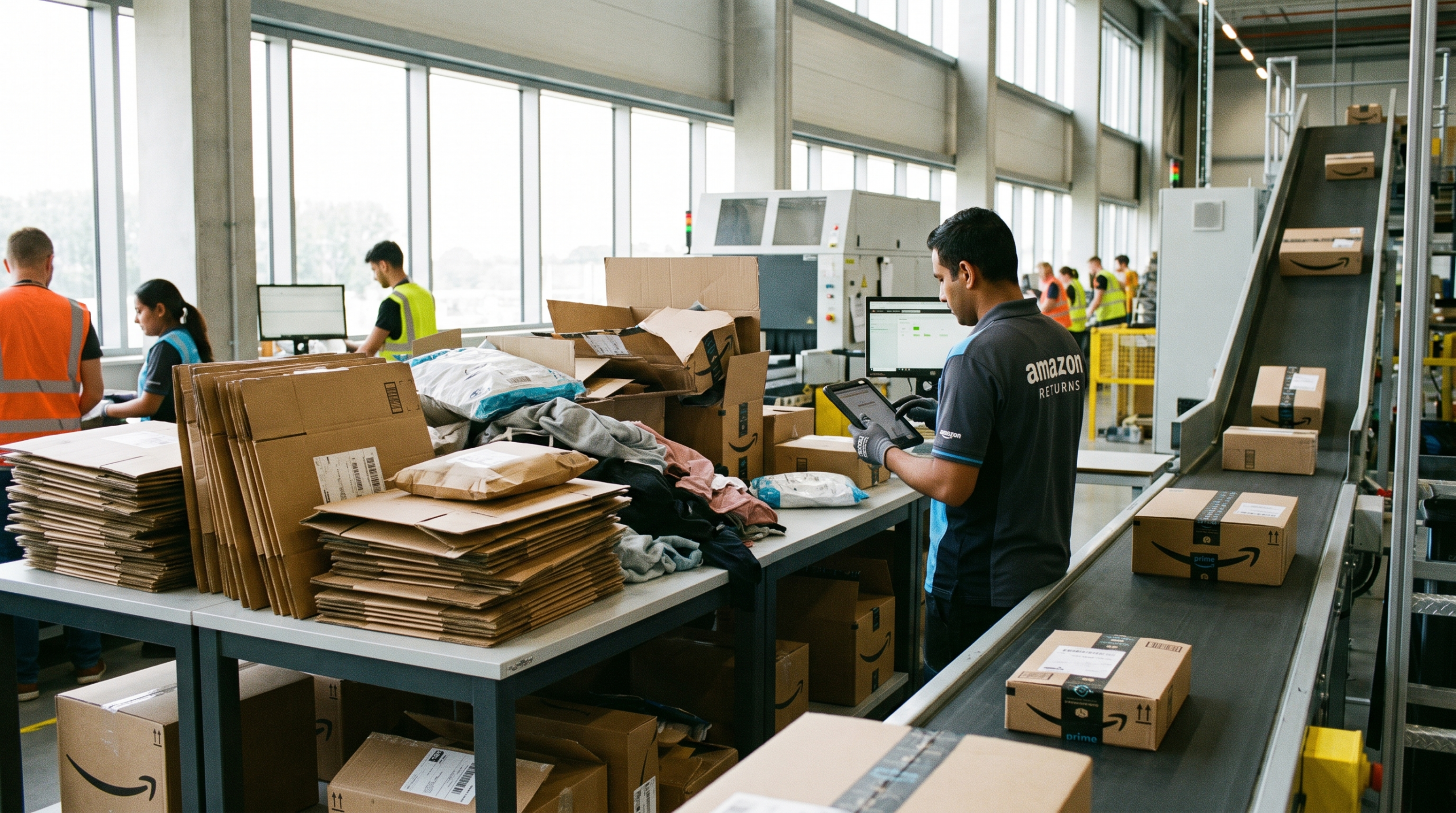
A customer wants to return a $14 phone case. You pay $8.50 for the return label, $2.20 in Amazon returns processing, roughly $2 in receiving and inspection labour — and then you dispose of the case anyway because the packaging is opened and the category will not let you resell it as new.
You spent $12.70 to recover nothing. Telling the customer to keep it would have cost $0.
That is the entire logic of returnless refunds, and in 2026 it has moved from an Amazon experiment to a standard line in most sellers’ returns policies. The question is no longer whether to offer them — it is where your break-even sits, and how you stop the policy from being farmed.
What a return actually costs in 2026
Sellers routinely underestimate this because they count only the return label. The real stack has five layers:
- Return freight. $6 to $12 for a standard-size parcel, more for anything oversized.
- Marketplace returns processing fee. Charged per returned unit on Amazon once you exceed your category threshold.
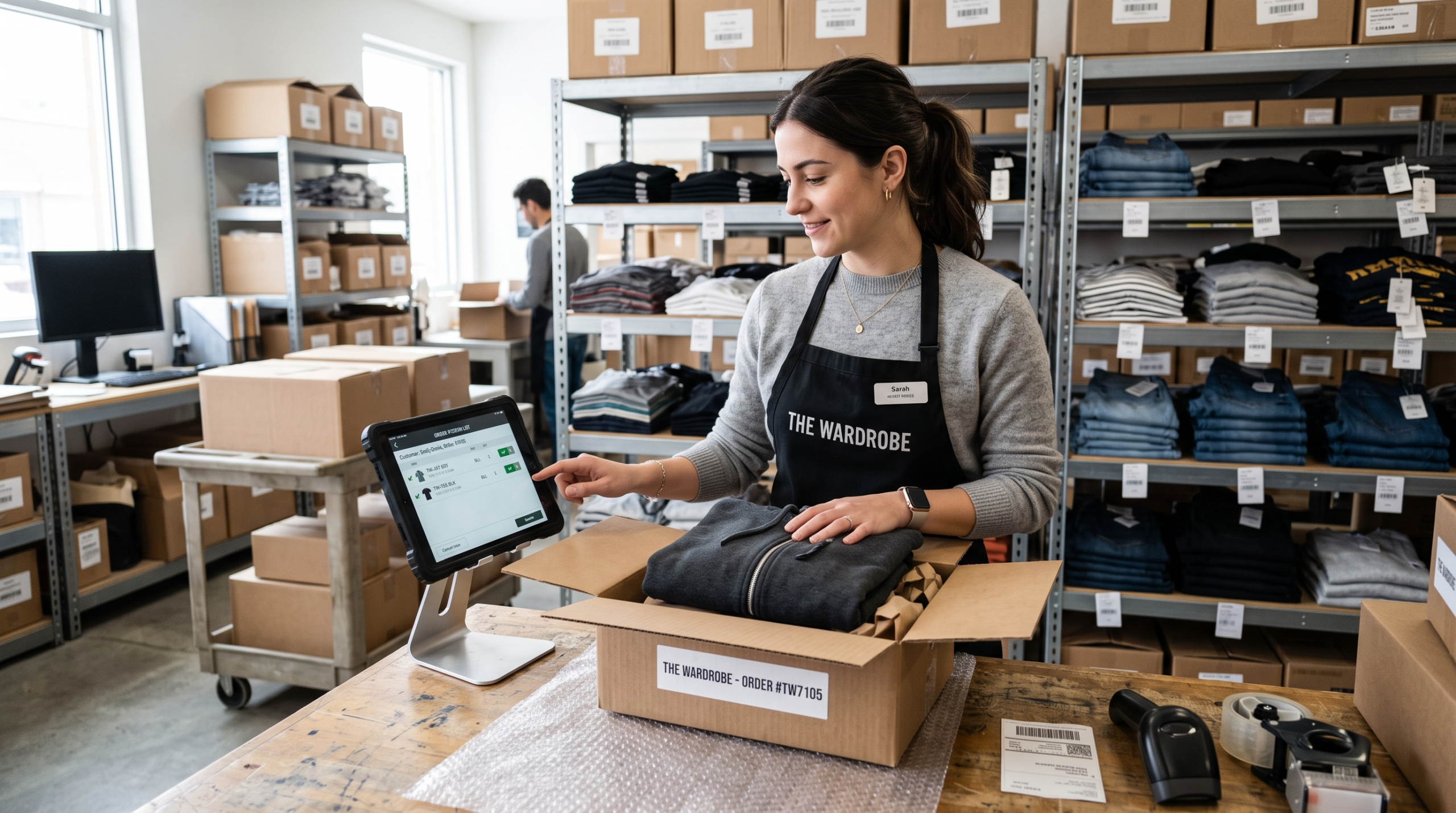
- Receiving, inspection and repack. $1.50 to $4 per unit at a 3PL, or the same in internal labour.
- Value recovery loss. Opened units typically resell at 40 to 70 percent of original price, if they resell at all.
- Refund administration. The payment processing fee you do not get back, plus support handling time.
Amazon’s returns processing fee is now the layer that tips the math, because since 2024 it applies to all categories rather than five, on a threshold system. Rates effective January 15, 2026 run roughly $1.78–$2.21 per return for Small Standard units (2–16 oz), $2.36 to over $5.00 for Large Standard (4 oz–3 lb), and from $6.74 up past $157.35 for Large Bulky and Extra-Large tiers.
The thresholds that decide whether you pay at all
You only pay the fee on returns above your category’s return-rate threshold — with one glaring exception.
| Category | Return rate threshold | Practical read |
|---|---|---|
| Apparel and Shoes | No threshold | Every return is charged, at any return rate |
| Grocery and Gourmet | 2.9% | Tightest threshold — very little headroom |
| Home and Kitchen | 8.1% | Typical mid-range category |
| Furniture | 9.6% | Low volume, very high per-unit fee |
| Consumer Electronics | 11.2% | Generous threshold, expensive units |
| Backpacks, Handbags, Luggage | 12.8% | Most headroom of the ~32 categories |
The measurement window is a three-month trailing calculation: Amazon counts units shipped in month one, then measures returns against them across months one to three, and charges only the units above the threshold. A seller who ships 500 units into an 8.1 percent threshold category and returns at 9 percent pays on roughly 4.5 excess units. Charges are auto-deducted between the 7th and 15th of the third month after shipment and surface in the SKU Economics Report — which is why many sellers never connect the deduction to the return that caused it.
If you sell apparel or shoes, read that first row again. There is no threshold. Returnless refunds are not an optimisation in those categories; they are a margin requirement.
Break-even: three real scenarios
| Item | Cost to process the return | Realistic resale recovery | Better option |
|---|---|---|---|
| $14 phone case (Small Standard) | ≈ $12.70 | $0 — disposed | Returnless refund |
| $38 kitchen gadget (Large Standard) | ≈ $15.50 | ≈ $19 as used/open-box | Marginal — test by SKU |
| $180 electronics (Large Standard) | ≈ $17 | ≈ $110 refurbished | Take the return |
The rule that falls out of this: returnless wins whenever processing cost exceeds recoverable value, which in practice means almost everything under roughly $25 in retail price, and a good deal more in low-recovery categories. All figures are indicative and move with your 3PL rates, carrier agreement and category.
Where returnless refunds win
- Low average selling price. Under $25, the label alone usually exceeds the item’s recoverable value.
- Zero resale value once opened. Consumables, personal care, printed goods, single-use items.
- Hazmat and perishables. Shipping them back is expensive, restricted or simply not permitted.
- Bulky and heavy items. Return freight on an oversized unit can exceed the retail price outright.
- International orders. Return freight plus re-import duty makes recovery almost always negative.
Where they do not
- High ASP goods with real secondary-market value.
- Resellable-as-new items in sealed packaging that passes inspection.
- Serialised or warrantied products where you need the unit back for RMA or recall traceability.
- Abuse-prone SKUs — anything with a history of repeat « not as described » claims from the same buyers.
How the marketplaces implement it
Amazon runs two separate mechanisms, and sellers conflate them constantly. FBA Returnless Resolutions applies to Amazon-fulfilled orders and can be ruled by product category and return reason. Seller-fulfilled returnless refunds apply to merchant-fulfilled orders and can be ruled by category, return reason and a price threshold you set.
Exclusions on the FBA side currently include heavy and bulky products, dangerous goods, recalled products, gift cards and non-returnable items. US guidance has also restricted products with an average sales price above $75 — but treat $75 as guidance, not law: it is not a universal eligibility threshold, and Seller Central menus and program settings change without much notice. Check your own settings rather than a blog’s number, including this one.
Walmart, eBay and the major Shopify returns apps all now offer an equivalent « keep it » resolution, typically rule-driven on price and reason. On your own storefront you have the most freedom — and the most responsibility for policing it.
Keeping the policy from being farmed
A returnless policy published as an unconditional promise will be exploited. Four controls that work:
- Cap it per customer per period. One or two returnless resolutions per account per year, applied silently.
- Require photo evidence for damage and not-as-described claims. It costs the honest customer thirty seconds and deters the rest.
- Keep the rule invisible. Never advertise « we never ask for returns. » Apply it at the resolution step, after the claim is filed.
- Monitor refund rate by SKU and by customer. A SKU whose returnless rate jumps without a quality change is usually a listing accuracy problem, not a fraud problem — fix the listing first.
A five-step rollout
- Pull 90 days of returns and compute true cost per return by size tier, including the processing fee deductions from your SKU Economics Report.
- Calculate recoverable value per SKU — what opened units actually sold for, not list price.
- Set a price threshold where processing cost exceeds recovery. For most sellers this lands between $20 and $30.
- Configure the rule in each channel: FBA Returnless Resolutions, seller-fulfilled rules, marketplace equivalents, storefront app.
- Review monthly. Watch returnless rate, refund rate by customer and the processing-fee line, and retune the threshold each quarter.
Do not forget the inventory entry
A returnless refund still removes a unit from stock. If your system only decrements on a received return, your on-hand counts drift upward, you under-order, and in FBA you risk tripping the low-inventory-level fee on a SKU you thought was covered. Write off the unit at the point of refund, not at a receipt that will never arrive.
Bottom line
Returnless refunds are not generosity — they are arithmetic. Below your break-even, asking for the item back destroys value for both sides: you pay to receive something you will discard, and the customer waits longer for a refund. Compute the threshold once, enforce it quietly, and the same policy that cuts your reverse-logistics bill also closes claims faster.
Need the break-even run on your own data? HereWeShip models reverse-logistics cost per SKU across your channels and sets the returnless threshold that protects margin without inviting abuse. Request a returns cost review.