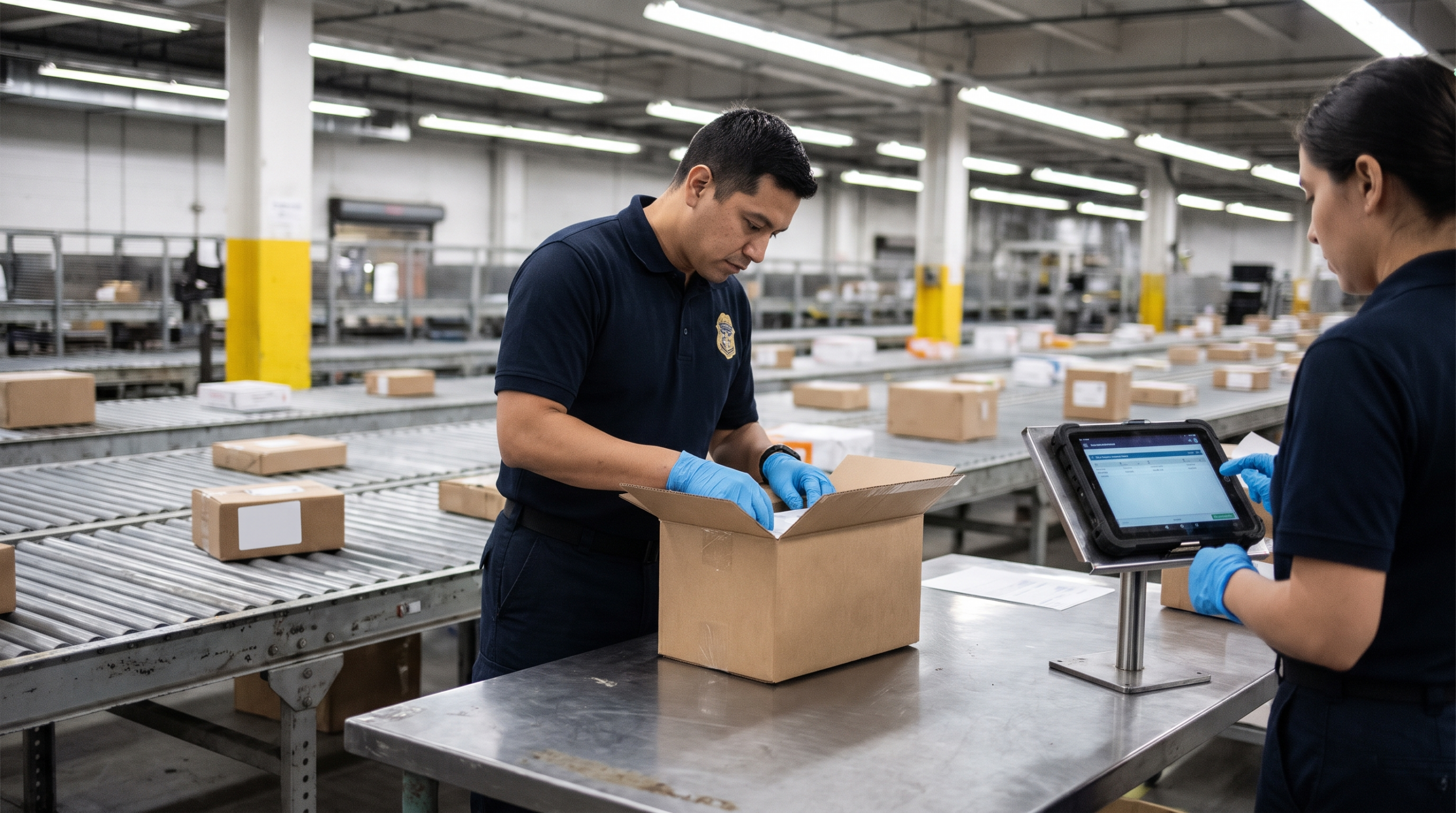
Walmart Marketplace holds sellers to three shipping thresholds in 2026: on-time delivery of 90% or higher, valid tracking of 99% or higher, and seller-initiated cancellations of 2% or lower. Standard sellers must also ship within two operational days of the order, support shipments until 11:00 a.m. local time at least five days a week at each active fulfillment center, and mark the order Shipped with valid tracking by the Expected Ship Date. Miss that date by four calendar days and Walmart auto-cancels the order.
Amazon sellers who expand to Walmart usually assume the rules travel with them. They do not. Walmart measures delivery where most sellers manage dispatch, and it enforces the gap in a way that can suppress listings before you have noticed the trend.
What are the Walmart Marketplace shipping thresholds in 2026?
Three shipping metrics carry direct enforcement risk.
| Metric | Walmart requirement | What it measures |
|---|---|---|
| On-time delivery rate | 90% or higher | Orders that arrive by the estimated delivery date |
| Valid tracking rate | 99% or higher | Orders with a working, scannable tracking number |
| Cancellation rate | 2% or lower | Seller-initiated cancellations |
The tracking bar is the one that catches people. At 99%, you get one untracked order in a hundred. A store doing 3,000 orders a month has room for thirty misses — total — across manual labels, marketplace-generated labels that never scan, and anything shipped by a method the platform cannot validate.
Some seller programs and categories apply a stricter on-time bar than 90%, so check the thresholds shown in your own Seller Center rather than assuming the floor.
What are Walmart’s ship-by deadlines and cutoff rules?
This is the part sellers most often miss, because it is operational rather than metric-based. Walmart’s shipping and fulfillment policy sets hard timing obligations before any metric is calculated.
| Requirement | Walmart rule | Applies to |
|---|---|---|
| Operating hours | Support shipments until 11:00 a.m. local time, at least 5 days per week | Each active fulfillment center |
| Standard lag time | Ship within 2 operational days of the order | Standard sellers, unless a lag-time exemption is approved |
| Ship-by, 0-day lag | Same operational day if the order arrives before cutoff, otherwise the next | Expected Ship Date calculation |
| Ship-by, 1-day lag | Order date plus 1 operational day | Expected Ship Date calculation |
| Ship-by, 2-day lag | Order date plus 2 operational days | Expected Ship Date calculation |
| Tracking deadline | Marked Shipped with valid tracking by the Expected Ship Date | Every order |
| Auto-cancellation | Expected Ship Date plus 4 calendar days | Order is canceled automatically |
Read the auto-cancellation row alongside the cancellation-rate threshold. An order you let drift past the Expected Ship Date by four days does not simply arrive late — it is canceled, and that cancellation lands on a metric with a 2% ceiling. One operational lapse therefore damages two standards at once.
The 11:00 a.m. operating-hours rule has a second-order effect too: it sets the earliest point at which Walmart expects your facility to be able to tender a shipment, which is why a late-morning internal cutoff is riskier on Walmart than on channels that only measure dispatch confirmation.
Why does delivery, not dispatch, change your carrier strategy?
This is the structural difference. Amazon’s late shipment rate asks whether you confirmed shipment by your promised ship-by date — the model behind Amazon Buy Shipping. Walmart’s on-time delivery rate asks whether the package landed on the buyer’s doorstep by the estimated delivery date.
The consequence is immediate: your carrier’s performance is now your performance. You can pick, pack and hand off flawlessly at 11 a.m. and still fail the metric because a regional hub had a weather day.
Three practical implications follow.
First, cheapest-rate routing becomes risky. Economy and ground-saver services often show wide delivery windows and weaker on-time consistency, especially in Zones 6 to 8. The $2 you save per label is worthless if it costs you three points of on-time delivery.
Second, transit time has to be modeled, not guessed. If your promised delivery date is built on optimistic carrier estimates rather than your actual observed transit times by zone, you are setting yourself up to fail a metric you control.
Third, Walmart’s Simplified Shipping Settings matter more than the name suggests. When you use them, carrier delays outside your control are generally not held against you, which transfers a chunk of the risk off your account. For sellers with volatile lanes, that protection is worth more than a marginally better self-managed rate.
If you are running several channels, note how differently each one frames the same obligation: eBay ties search ranking to delivery SLAs while Etsy’s Star Seller badge measures on-time dispatch at 95%. A single carrier policy cannot satisfy all three optimally.
Where do sellers actually lose points?
Promising national two-day without national coverage
An aggressive delivery promise from a single fulfillment location works fine for orders inside your close zones and quietly destroys your metric on the rest. Either narrow the promise by region or add inventory closer to your far-zone demand.
Late-day handoffs
A label created at 4:50 p.m. for a 5:00 p.m. pickup the driver already made ships tomorrow, but the clock started today. Across a month, late handoffs are one of the largest silent contributors to on-time failures. Set an internal cutoff 90 minutes before your real pickup and treat it as fixed.
Tracking numbers that never scan
A label printed but not physically tendered — a return-to-shelf, a cancelled pick, a box left on the bench — creates a tracking number with no scan history. These count against valid tracking. Reconcile printed labels against first-scan events daily, not weekly.
Cancelling for stock you thought you had
A 2% cancellation ceiling is unforgiving. If you sell the same inventory across Walmart, your own store and another marketplace, latency between channel updates will eventually oversell you. Hold a buffer on shared SKUs and push inventory syncs on a short interval.
Address quality
A failed delivery attempt from a bad apartment number is recorded as a late delivery. Address validation at checkout is cheap insurance for a metric with real enforcement teeth.
What happens if you fall below a Walmart shipping standard?
Walmart’s policy is explicit that enforcement is at its sole discretion, and that a single violation is enough to trigger it. The published consequences:
- Listing suppression, selling limits, or withholding of all funds. Any of the three may follow one violation.
- Repeated late deliveries may lead to restrictions on your selling privileges.
- Repeated late shipments damage your performance metrics directly.
- Undelivered orders may be cancelled by Walmart once an order reaches a terminal state, and the seller is responsible for the associated costs.
- Marking orders shipped without shipping them makes the seller responsible for shipping charges, refunds and adjustments.
- Excessive use of Additional Days Off may lead to temporary or permanent suspension, or termination.
The funds-withholding provision is the one worth internalising. On most channels a performance problem costs you visibility; on Walmart it can cost you working capital while you fix it. That changes the calculus on whether to pay for a faster service tier on a marginal lane.
Separately, US sellers should remember that marketplace standards sit on top of federal rules: the FTC 30-day shipping rule applies regardless of what any platform requires.
How do the December 2026 carrier changes threaten your on-time rate?
Because Walmart measures delivery rather than dispatch, a carrier price change is a compliance decision and not just a budget line. Three dated changes land inside this peak season.
| Date | Carrier change | Effect on a Walmart seller |
|---|---|---|
| November 2, 2026 | UPS reset its US Ground, Ground Saver and Domestic Air fuel tables. The diesel price at which the narrower Ground bands begin moved from $4.99 to $5.80 per gallon. | Roughly half a percentage point more surcharge at current fuel prices, on top of the 33.25% FedEx Express and 29.25% FedEx Ground surcharges published for the week of November 2 to 8, 2026. |
| December 21, 2026 | UPS raises daily Ground, Air and International rates by an average net 5.9%. Additional Handling minimum billable weight rises from 40 lb to 50 lb, and the ZIP code lists behind area surcharges change. | A mid-peak cost jump that tempts a downgrade to economy service, exactly when carrier on-time consistency is weakest. |
| January 17, 2027 | The USPS temporary 8% transportation increase applied on April 26, 2026 is set to expire. | Relief arrives only after the peak-season metric damage has already been recorded against your account. |
The trap is the sequence, not any single number. A rate increase on December 21 lands in the middle of the weeks when carrier networks are least reliable, and the cheapest reaction, shifting far-zone orders to a ground-saver service, is precisely the one that costs on-time delivery points. On a channel that can withhold funds over a single violation, absorbing the higher rate through late December is usually cheaper than repairing a suppressed listing in January.
The Additional Handling change deserves separate attention. A package billed at a 40 lb minimum for additional handling is billed at 50 lb from December 21, which quietly raises the cost of exactly the oversized SKUs most likely to miss an estimated delivery date. HereWeShip models these increases lane by lane before peak, so sellers know which SKUs can absorb a faster service tier and which have to be repriced instead.
What is a practical compliance routine?
- Daily: reconcile printed labels against first carrier scans. Any label with no scan by end of day gets investigated the same day.
- Daily: flag orders approaching the Expected Ship Date, so none drifts toward the four-day auto-cancellation.
- Weekly: pull on-time delivery by carrier and by destination zone. Look for a single lane or service dragging the average, not a general decline.
- Monthly: compare promised transit times against actual observed transit by zone, and adjust the promise where reality disagrees.
- Quarterly: review whether your service mix still fits. A service that was fine in spring may not survive peak-season network strain.
Why does peak season break the standards?
From late September through mid-January, carrier networks run at capacity and on-time consistency degrades across the board. A delivery-based metric absorbs all of it.
Three adjustments help. Widen your promised delivery windows during peak rather than defending an off-season promise you can no longer hit. Shift far-zone orders to a faster service tier even at higher cost, since the metric damage outlasts the freight savings. And front-load inventory into any distributed locations before Black Friday, because the fastest way to improve delivery time is to shorten the distance. Our 2026 holiday shipping deadlines list the carrier cutoffs to build that plan around.
What to do if you are already below threshold
Falling below a standard triggers a requirement to take immediate corrective action. Act on the diagnosis, not the symptom:
- Segment failures by carrier, service and zone. One bad lane is a routing fix, not a process overhaul.
- Move at-risk SKUs to a more reliable service immediately, even at a worse rate. Restoring the metric is the priority.
- Extend promised delivery dates to something you can actually hit while you repair the underlying issue.
- Document what you changed. Performance conversations go better with evidence of a specific fix.
The takeaway
Walmart holds sellers to a delivery outcome rather than a dispatch action, sets a stricter tracking bar than most sellers are used to, and reserves the right to withhold funds over a single violation. That combination means your carrier mix is a compliance decision, not just a cost decision.
If you also use Walmart Fulfillment Services, the thresholds above are Walmart’s responsibility rather than yours on those orders — our breakdown of WFS fees in 2026 covers what that protection costs per unit.
Requirements, thresholds and program details can change; always confirm current standards in your Seller Center. Rate and cost figures referenced here are indicative and vary by carrier, service and agreement.
Ship to the standard, not to the hope
HereWeShip helps ecommerce sellers build carrier mixes that hit marketplace delivery promises without overpaying for speed they do not need. Review your shipping setup before peak puts your metrics to the test.
Sources
On-time delivery and valid tracking thresholds, operating hours, lag time, Expected Ship Date calculation, the four-calendar-day auto-cancellation and the enforcement provisions: Walmart Marketplace, Shipping and fulfillment policy. Accessed October 29, 2026. Carrier fuel surcharge percentages for the week of November 2 to 8, 2026, the UPS fuel table reset effective November 2, 2026, the December 21, 2026 UPS general rate increase and Additional Handling billable weight change, and the USPS temporary surcharge expiry of January 17, 2027: carrier rate-change notices and published fuel surcharge tables, consulted November 3, 2026. All rate figures are indicative and vary by carrier, service, zone, province or state, and any negotiated agreement.